

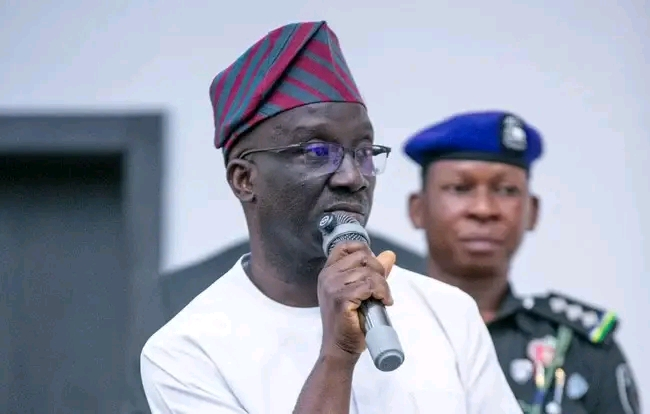
Edo Governor Monday Okpebholo says petrol costs more than ₦3,000 per litre in the UK, compared with about ₦1,385 in Lagos and ₦1,430 in Abuja.
Edo State Governor Monday Okpebholo has defended the economic reforms of President Bola Ahmed Tinubu, arguing that Nigerians currently pay significantly less for petrol than motorists in the United Kingdom.
Okpebholo made the remarks on Thursday at the “Operation Rescue Benin-Asaba Road” event in Edo State, where he highlighted what he described as the impact of the Tinubu administration’s economic policies.
The governor said he travelled to London the previous week and used the opportunity to compare petrol prices in the UK with those in Nigeria.
According to him, petrol in the UK costs more than ₦3,000 per litre when converted to naira.
“I was in London last week. I checked the price of fuel and it was about £1.74 per litre. When you convert it, it is over ₦3,000,” Okpebholo said.
Data cited by TheCable showed that the average UK petrol price was about £1.74 per litre as of September 24, 2026. At prevailing exchange rates, that translates to more than ₦3,000 per litre.
By comparison, the latest NNPC pump-price figures cited by TheCable put petrol at about ₦1,385 per litre in Lagos and ₦1,430 in Abuja, although pump prices vary across different parts of Nigeria.
Okpebholo said the price comparison demonstrated that Nigerians were “doing very well” under the current petrol pricing regime.
He also praised Tinubu’s economic reforms, describing the President as an economist who was working to stabilise the Nigerian economy.
The governor acknowledged that the reforms had created difficulties for Nigerians but argued that the measures were necessary to reposition the economy and deliver greater benefits over time.
Using an aircraft analogy, Okpebholo said the economy was still in the process of taking off and that Nigerians would begin to experience more benefits once it reached what he described as a “cruising level.”
He said the ongoing infrastructure projects across the country, including road construction, were signs of the government’s efforts to translate its economic policies into physical development.
The governor particularly pointed to road projects as part of the visible outcomes of government spending, stressing that improved infrastructure would support economic activities and make movement of people and goods easier.
Tinubu’s economic reforms, including the removal of the petrol subsidy and changes to foreign-exchange policy, have significantly altered the cost of living and business operations in Nigeria. The government has maintained that the measures are intended to strengthen public finances, attract investment and create the conditions for sustainable economic growth.
However, the reforms have also generated widespread debate because of their impact on fuel prices, transportation costs, food prices and household purchasing power.
Okpebholo’s comments come amid the continuing national discussion over whether the economic gains being cited by the government are translating into meaningful improvements in the daily lives of Nigerians.
Leave a comment
Your email address will not be published. Required fields are marked *