

The government says the overhaul of history,geography and civic education will remove colonial-era language, highlight African resistance and put Burkina Faso’s own historical experience at the centre of classroom teaching.
Burkina Faso is moving to overhaul the way its history is taught in schools, with the government seeking to remove what it describes as colonial-era language and place African perspectives more prominently in the classroom.
The reform, announced by Secondary Education Minister Moumouni Zoungrana, covers history, geography and civic education and is being introduced as part of a broader effort to reshape the country’s education system around national values and historical sovereignty.
One of the most striking changes concerns the language used to describe Europeans who entered Africa during the period of colonial expansion.
According to the minister, terms such as “explorers” and “conquerors” will be reconsidered, with European agents involved in the expansion into Africa instead described as “invaders” and, in some contexts, “spies.” The government argues that the traditional terminology can obscure the political and military nature of European expansion.
The planned changes go beyond replacing individual words.
Officials say the revised curriculum will give greater attention to African societies before colonial rule, the resistance mounted against foreign conquest and the achievements and experiences of African communities that they believe have received insufficient emphasis in existing teaching materials.
For Burkinabè students, that could mean a different starting point for learning about the colonial period — one that asks not only who arrived from Europe, but who was already living, governing, trading and building societies across the region before colonial expansion.
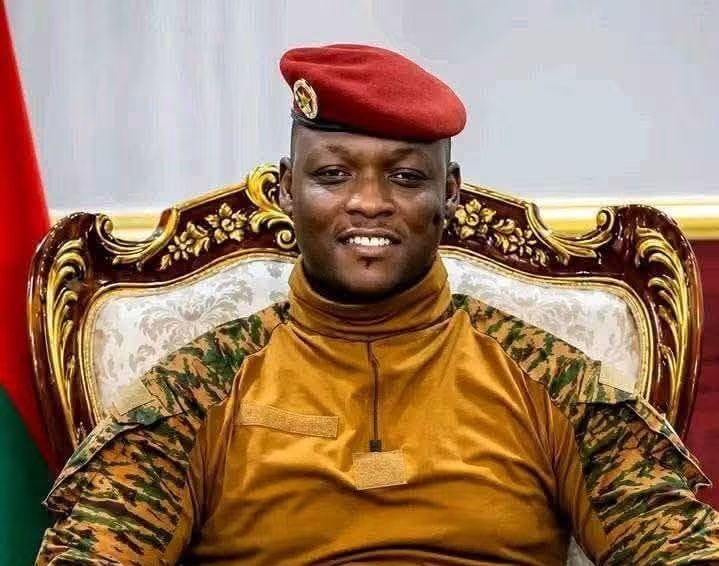
The reform comes against the backdrop of the government’s broader push for national sovereignty under Captain Ibrahim Traoré. Burkina Faso’s authorities have increasingly sought to reduce the influence of its former colonial power, France, while promoting policies centred on national identity and self-reliance.
The country was a French colony until gaining independence in 1960.
The education ministry has also been working on wider curriculum reforms aimed at adapting teaching to Burkina Faso’s social and cultural realities. Government documents say the country wants an education system that strengthens civic and patriotic values while responding more directly to national needs.
Importantly, the new textbooks have not yet been fully rewritten. A teacher in Ouagadougou told AFP that the ministry had distributed guidance indicating which expressions should be avoided and which subjects should be removed or added while the broader revision is undertaken.
The move reflects a much wider debate across Africa over how the continent’s history should be taught.
UNESCO has similarly acknowledged concerns that the teaching of African history has often been shaped by Eurocentric perspectives. Its General History of Africa curriculum initiative seeks to bring African histories, cultures and contributions more fully into education systems.
For Burkina Faso, however, the debate is particularly political and personal: who gets to tell the story of Africa, and which words should be used to describe the forces that shaped its past?
Supporters of the reform see it as an attempt to correct a historical imbalance and give young Burkinabè a stronger connection to their own heritage. Critics of politically driven curriculum changes elsewhere have warned that rewriting history can also risk replacing one selective narrative with another.
Either way, Burkina Faso is making clear that the language used in its classrooms is no longer being treated as a neutral matter.
The country is attempting to reshape the historical lens through which a new generation will understand colonialism, African resistance and its own place in history.
Leave a comment
Your email address will not be published. Required fields are marked *