

The 24-kilometre mass transit project will deploy 120 CNG-powered buses, dedicated lanes and modern terminals to ease congestion and transform public transportation in Kaduna.
The Kaduna State Government says construction of the Kaduna Bus Rapid Transit system will begin in the first quarter of 2026, with officials projecting that the project will create up to 20,000 jobs, cut commuting costs, and reduce carbon emissions across the state.
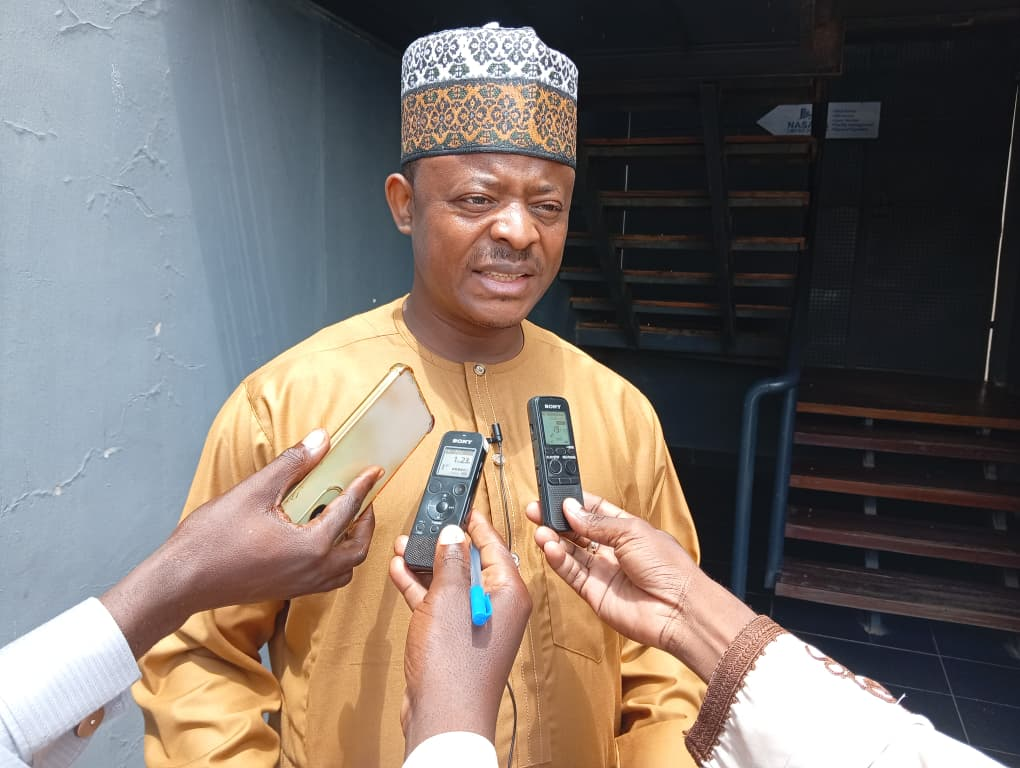
Speaking during a one-day media engagement in Kaduna, the Managing Director of Kaduna Line and Acting Director General of the Kaduna State Transport Regulatory Authority, KADSTRA, Engineer Inuwa Ibrahim, said the state has completed the design and planning stages and is now set to move into implementation. He described the BRT as the first of its kind in Kaduna and the second in Nigeria after Lagos.
Engineer Ibrahim said media engagement remains critical to keeping citizens informed. “Without media, our people, our citizens, will not be able to know what the state government is doing in terms of developmental projects in the entire state of Kaduna State,” he said.
The economic outlook, according to him, is significant. The 24-kilometre corridor is expected to generate between 10,000 and 20,000 direct and indirect jobs. The system will deploy 120 articulated buses, supported by bus stops, shelters, drivers, mechanics and service crews.“Considering this number of fleet, even to say you have 120 drivers, the support, the mechanics, servicing, and so on and so forth. So there is so much economic benefit with respect to this project,” he added.
With fuel prices and scarcity biting hard nationwide, the KADSTRA boss said the BRT offers immediate relief because it will run entirely on Compressed Natural Gas, CNG. “Because the fuel is greener. We are using CNG all through, which is cheaper and cleaner. Even our environment will be more cleaner,” Ibrahim said, noting that public transport systems globally help keep fares low.
The Project Coordinator of the Kaduna BRT, Engineer Aliyu Usman, said the project is designed to deliver efficient transportation and sustainable urban development, with a strong focus on cutting greenhouse gas emissions and moving the state from informal to formal public transport.
Engineer Usman explained that the CNG-powered buses will emit far less carbon monoxide, reducing the state’s carbon footprint. He added that the BRT will also cut travel time and road congestion, while fares will be subsidized compared to current informal transport. An in-built Intelligent Transport System, ITS, will also improve security and service delivery.
On timelines and funding, he said construction is expected to last one and a half years under ideal weather conditions. There are no funding worries, he noted, as the project is financed by AFD with counterpart funding from the Kaduna State Government under Senator Uba Sani to cover taxes and compensation.
Engineer Usman said Kaduna has already made progress in organizing the sector since the creation of KADSTRA. Efforts are underway to consolidate buses into structured terminals at Mando, Kakuri as the Southern Terminal, and Millennium City as the Eastern Terminal. “Gradually now we are transiting from the informal to formal,” he said.
Giving further details, the Project Coordinator for EPCS on Kaduna BRT, Idris Lawal Akiremi of Advance Engineering Consultants, said the entire infrastructure for phase one has been fully designed. The first phase covers 17 kilometers of the 25-kilometre corridor and will include 20 stations, a terminal at Kawo, and a depot.
Akiremi said detailed design for all infrastructure will be completed by the end of October. Procurement will follow for six months, after which full construction begins. To minimize disruption, utility relocation will start soon and an alternative route already commissioned is being worked on. Terminal 1 at Kawo is expected to start even earlier, before Q1 2026, as its design is ready and procurement is in process.
He said the BRT will prioritize the masses by running on dedicated lanes, moving faster than private vehicles and saving commuters time on routes from Kawo to Kasuwan and the southern parts of the city. As a CNG-driven system, it is expected to significantly cut greenhouse gas emissions as more people drop their cars for public transport, leading to a healthier environment.
“You cannot overemphasize the importance of this project. It's going to have a lot of huge impact, especially on the masses, and by extension, to everybody,” Akiremi said. Officials described the Kaduna BRT as the first in Northern Nigeria and a major step toward affordable, efficient and cleaner urban mobility for the state.
Leave a comment
Your email address will not be published. Required fields are marked *