

Lawmakers vote 55–15 to retain manual transmission of results amid concerns over INEC’s 2027 election timetable and Ramadan timing.
The Nigerian Senate on Tuesday passed the Electoral Act, 2022 (Repeal and Re-Enactment) Bill, 2026 after heated deliberations that climaxed in a dramatic showdown over Clause 60, the provision regulating the transmission of election results.
Proceedings in the red chamber turned rowdy when Senator Enyinnaya Abaribe (ADC, Abia South) demanded a formal division on Clause 60(3), which permits the manual transmission of results using Form EC8A where electronic upload to the Independent National Electoral Commission (INEC) Result Viewing Portal is hindered by network failure.
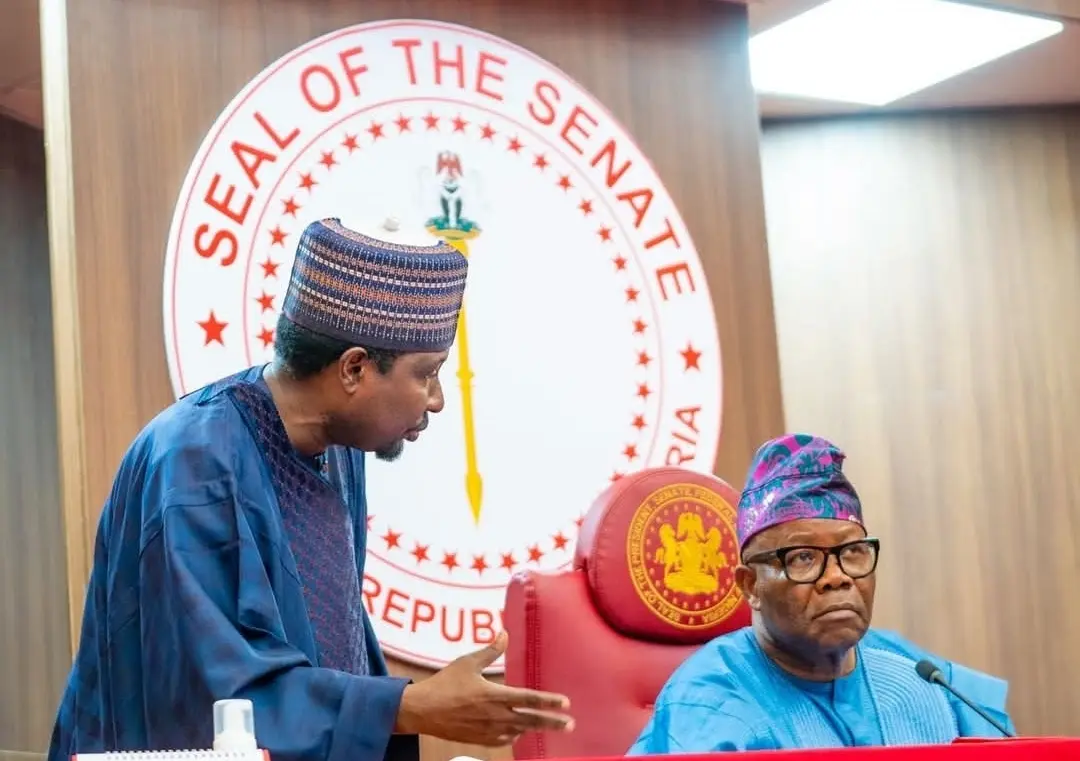
Senate President Godswill Akpabio initially ruled that the demand for division had earlier been withdrawn, a position immediately challenged by opposition senators. The tension escalated when Deputy Senate President Barau Jibrin, citing Order 52(6) of the Senate Standing Orders, argued that revisiting a matter already ruled upon was procedurally out of order. The disagreement sparked loud protests across the chamber, with Senator Sunday Karimi briefly confronting Abaribe during the standoff.
Intervening, Senate Leader Opeyemi Bamidele clarified that his earlier motion for rescission had effectively nullified previous decisions on the bill, thereby reopening all clauses for fresh consideration. Akpabio, while acknowledging the intensity of the debate, suggested that Abaribe’s insistence on a division was aimed at publicly registering his position before Nigerians.
After sustaining a point of order, the Senate President eventually allowed the division under Order 72(1). Senators in favour of retaining the manual transmission proviso stood first, followed by those opposed. At the end of the count, 55 senators voted in support of the clause, while 15 opposed, securing its retention in the bill.
The controversy around Clause 60 arose during the clause-by-clause review in the Committee of the Whole, following the Senate’s decision to rescind its earlier passage of the bill. Bamidele had moved the rescission under Order 52(6), citing concerns triggered by INEC’s recently announced timetable for the 2027 general elections, which fixes presidential and National Assembly polls for February 2027.
Lawmakers warned that Clause 28, as earlier drafted, mandates elections to be conducted at least 360 days before the expiration of tenure, a provision that could push the polls into the Ramadan fasting period. They argued this could negatively affect voter turnout, logistics, stakeholder engagement, and the overall credibility and inclusiveness of the electoral process.
Beyond the timing concerns, senators also flagged technical and drafting inconsistencies in the bill’s Long Title and multiple clauses — including 6, 9, 10, 22, 23, 28, 29, 32, 42, 47, 51, 60, 62, 64, 65, 73, 77, 86, 87, 89, 93, and 143 — citing errors in cross-referencing, serial numbering, and internal coherence.
The tense session was briefly suspended for a closed-door meeting after murmurs and consultations erupted at the Senate President’s desk when Abaribe raised his point of order on Clause 60.
Leave a comment
Your email address will not be published. Required fields are marked *