

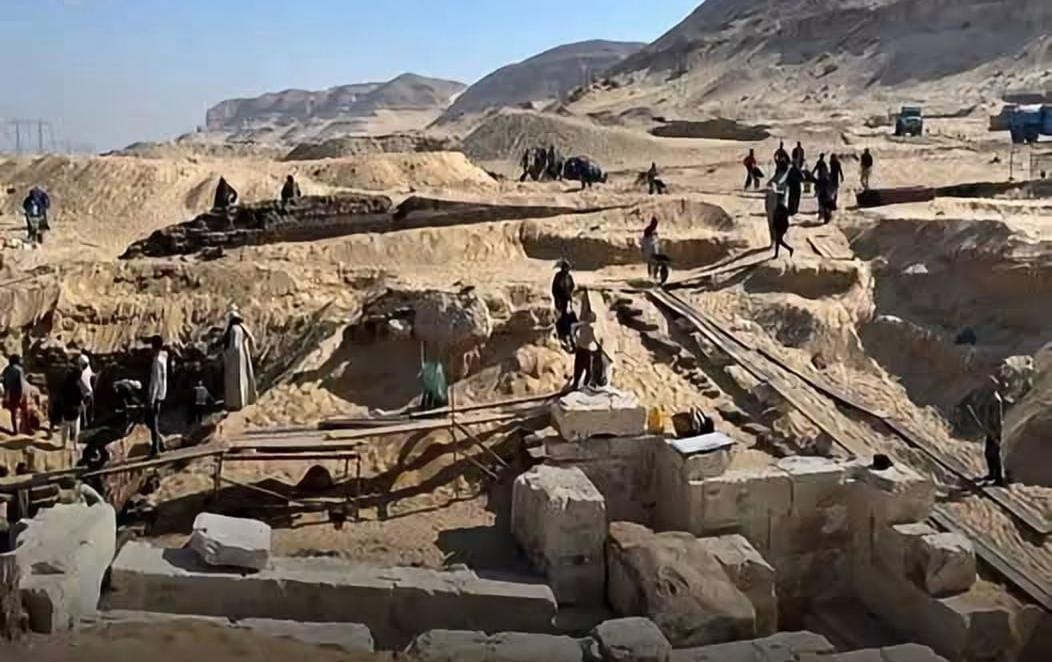
Researchers combined satellite radar imagery and underground electrical surveys to locate a buried mudbrick structure in the Nile Delta, believed to have served a religious or administrative purpose.
Archaeologists have rediscovered a 2,600 year ild structure buried beneath Egypt’s Nile Delta after satellite radar imagery provided the first clues to its existence.
The discovery, made at the ancient city of Buto, offers fresh insights into the region’s religious history and the architectural practices of ancient Egyptians.
The research team initially detected possible buried structures using satellite radar images, identifying architectural features beneath an area larger than a football field.
To investigate further, researchers employed electrical resistivity tomography (ERT), a non-invasive technique that sends small electrical currents into the ground to identify differences in underground materials. The combined methods helped locate the structure and examine its foundations without extensive excavation.
Located about 10 to 20 feet (3 to 6 metres) below the surface, the ancient mudbrick building measures approximately 82 by 66 feet (25 by 20 metres).
Researchers traced its origins to Egypt’s 26th Dynasty, also known as the Saite period, which spanned the seventh and sixth centuries BC. Although its exact purpose remains unknown, the team believes it may have served as a tomb, shrine or residence for priests.
Excavations guided by the underground surveys uncovered several objects associated with religious practices, including amulets and an altar, strengthening the possibility that the building had a sacred purpose.
Buto was once a major political and religious centre in Lower Egypt and an important place of worship for Wadjet, the cobra goddess regarded as the protector of the region.
Beyond the ancient structure, researchers also identified evidence of settlements believed to date to either the Ptolemaic period (305–30 BC) or the Roman period (30 BC–AD 395).
The discovery is particularly significant because much of Buto's archaeological remains lie beneath thick layers of sediment and building debris, with some of the oldest structures submerged below groundwater level, making conventional excavation difficult.
The findings, published this year, highlight how satellite technology and ground based scanning can help archaeologists investigate buried historical sites without extensive digging.
Hussein Bassir, an Egyptologist and director of the Antiquities Museum at the Bibliotheca Alexandrina, who was not involved in the research, described the discovery as an important addition to the understanding of Buto's historical and religious significance.
Leave a comment
Your email address will not be published. Required fields are marked *