

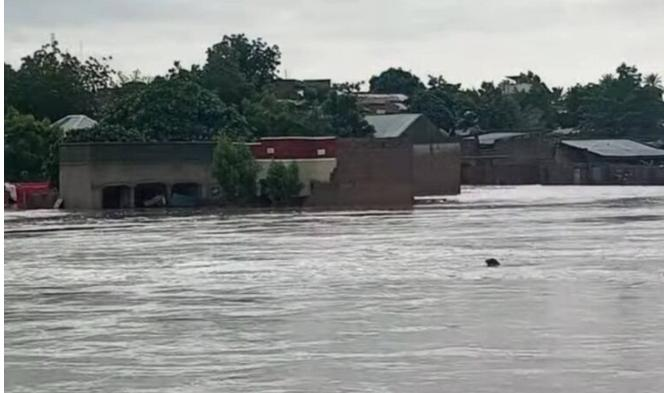
Heavy rainfall expected across key states as over 14,000 communities nationwide are flagged for high flood risk, heightening fears of disease outbreaks.
Following forecasts of heavy rainfall and flooding, the Nigeria Centre for Disease Control and Prevention (NCDC) has placed 10 states on high alert.
The agency warned that the affected regions face an elevated risk of disease outbreaks, particularly cholera. It also disclosed that 14,118 communities nationwide are at high risk of flooding.
This was contained in a statement issued by the Director-General of the NCDC, Dr. Jide Idris.
According to him, projections from the Federal Ministry of Environment and the Nigerian Meteorological Agency (NiMet) indicate that parts of Adamawa, Enugu, Kaduna, Kogi, Niger, Osun, Oyo, Plateau, Taraba, and Kwara states will experience intense rainfall between April 13 and 17, 2026.
Idris noted that the warning comes at a critical period in Nigeria’s public health calendar, as the country enters the seasonal window when cholera cases typically surge.
He added that early surveillance data already show rising infections across several states.
“These forecasts are concerning because they coincide with the period when cholera transmission typically accelerates. Flooding can contaminate water sources and disrupt sanitation systems, creating conditions for rapid spread,” Idris said.
Historical data in Nigeria show that flood-prone states often record high cholera cases during the rainy season.
Beyond cholera, Idris warned that the affected states also face increased risks of other diarrhoeal diseases and mosquito-borne infections.
He emphasised that the potential health crisis can be mitigated through early action and public compliance with preventive measures.
Flooding remains a major public health challenge in Nigeria, driven by climate variability, rapid urbanisation, and inadequate drainage infrastructure.
Leave a comment
Your email address will not be published. Required fields are marked *