

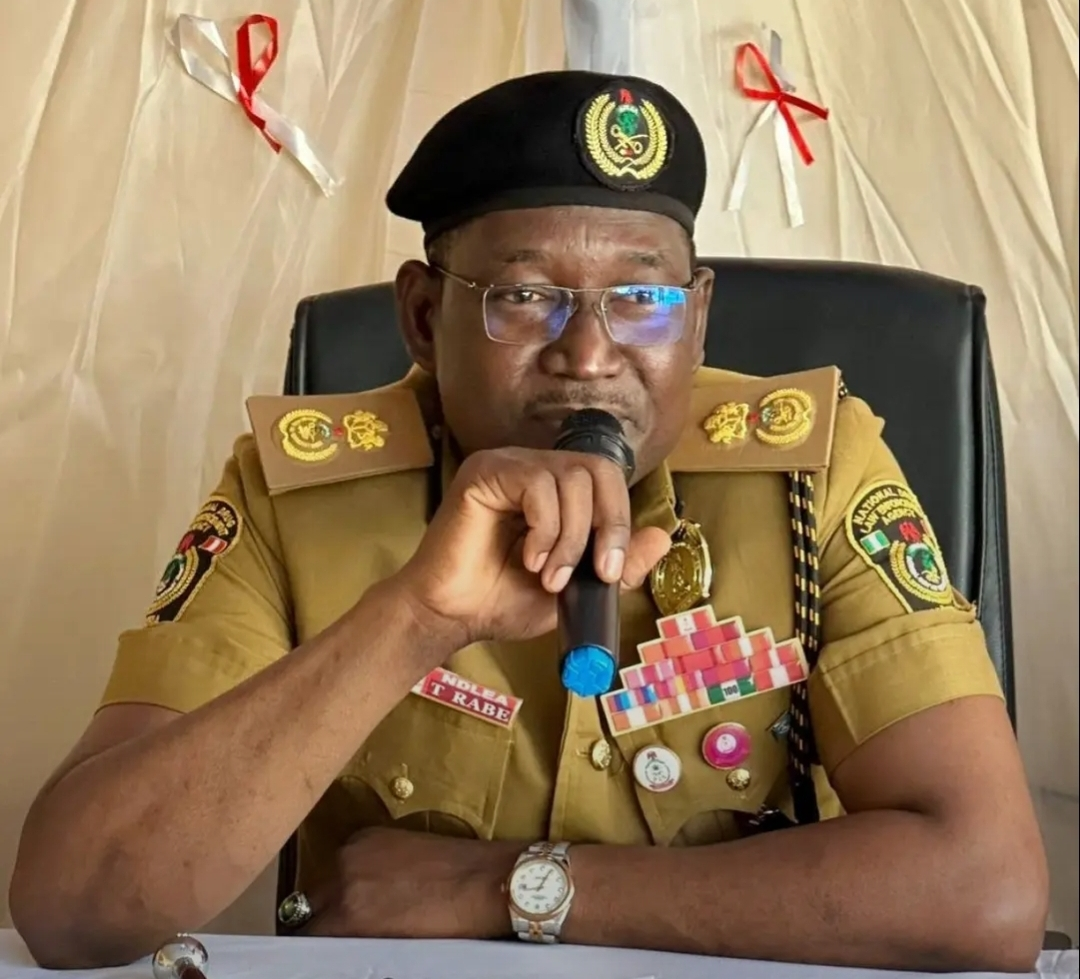
Ogun NDLEA Commander Tijjani Rabe defends the agency’s anti-drug operations, insisting cannabis farm destruction is backed by law and warning that legalisation without strong regulation could strengthen criminal networks.
The Commander of the National Drug Law Enforcement Agency (NDLEA) in Ogun State, CN Tijjani Rabe, has hit back at human rights activist and African Action Congress (AAC) presidential candidate Omoyele Sowore over his criticism of the agency’s destruction of cannabis farms.
Rabe said leadership should not be built on insults against institutions whose personnel “sacrifice daily for this country,” insisting that the NDLEA’s operations are guided by Nigeria’s existing laws.
Sowore, in a post on X on Tuesday, criticised the NDLEA for destroying cannabis farms, arguing that the crop has significant economic, medicinal and industrial value and should instead be legalised and regulated.
“It is idiotic @ndlea_nigeria wake up, put on uniforms, march into farms, and set economically viable crops worth millions of dollars ablaze while your country is drowning in multidimensional poverty,” Sowore wrote.
“Stop destroying cannabis farms. Stop wasting enormous economic opportunities in the name of a failed and outdated policy.”
Responding in a statement on Wednesday, Rabe said that although Sowore described the agency’s actions as foolish, Nigerians could judge the NDLEA by its record over the past five years.
Sowore Urges FG to Stop Destroying Cannabis Farms, Calls for Legalisation and Regulation
He said the agency had made major seizures of illicit drugs and prevented large quantities from reaching communities, schools, barracks and motor parks.
“NDLEA did not wake up and decide to set farms ablaze for sport. We act on a clear mandate given to us by the laws of the Federal Republic of Nigeria,” Rabe said.
Ogun Customs Seizes N3.57bn Contraband, Warns Smugglers of Tougher Enforcement
“You cannot seek to be Commander-in-Chief and in the same breath denigrate the men and women who serve under that command.”
The Ogun commander also highlighted the agency’s work beyond arrests and seizures, saying NDLEA personnel had counselled and rehabilitated thousands of young Nigerians while dismantling transnational drug networks.
According to him, proceeds from illicit drug trafficking are also used to finance other criminal activities, including kidnapping, banditry and arms trafficking.
Rabe said Sowore, like any other Nigerian, had the right to disagree with the country’s drug laws but should pursue legal and democratic means to change them.
“If you disagree with the law, the democratic path is to sponsor a bill to change it. Not to resort to abuse. NDLEA, and indeed all law enforcement agencies, deserve better, especially from those who aspire to lead,” he said.
The NDLEA commander acknowledged the economic hardship facing Nigerians but argued that poverty was not the country’s only crisis.
He said Nigeria was simultaneously dealing with drug addiction, mental health challenges and insecurity that were being aggravated by illicit drugs.
“We cannot solve one crisis by deepening another,” Rabe said.
He further cautioned against immediate legalisation of cannabis, arguing that such a policy would require strong regulatory safeguards, including effective tracking systems, prescription monitoring, laboratories and rehabilitation facilities.
Rabe cited Canada as an example, saying that despite the country’s legalisation of cannabis, it still faces challenges from an illicit market.
He argued that Nigeria’s relatively limited regulatory capacity could make the consequences more severe if cannabis were legalised without adequate preparation.
Rabe also challenged the description of the cannabis farms as simply “economically viable farms,” alleging that some are controlled by armed networks involved in drug trafficking and other forms of violence.
“To legalize now is to hand legitimacy to those same networks. You do not defeat poverty by empowering cartels,” he said.
Instead, he called for government investment in laboratories, rehabilitation centres and cooperatives as a foundation for any potential regulated cannabis industry in the future.
“Until that foundation exists, NDLEA will continue to do what the law demands of us: interdict, destroy, and save lives. That is not ‘idiotic’, Sir. That is duty,” Rabe declared.
While saying the agency would excuse the tone of Sowore’s criticism, Rabe expressed appreciation to Nigerians who continue to support the NDLEA’s anti-drug campaign.
The exchange highlights a wider debate in Nigeria over cannabis policy, with advocates of legalisation pointing to its potential economic, medicinal and industrial benefits, while law-enforcement authorities continue to emphasise the risks posed by illicit cultivation, trafficking, addiction and criminal networks.
Leave a comment
Your email address will not be published. Required fields are marked *