

Diplomat warns against “dangerous” religious claims as debate over Muslim-Muslim ticket resurfaces
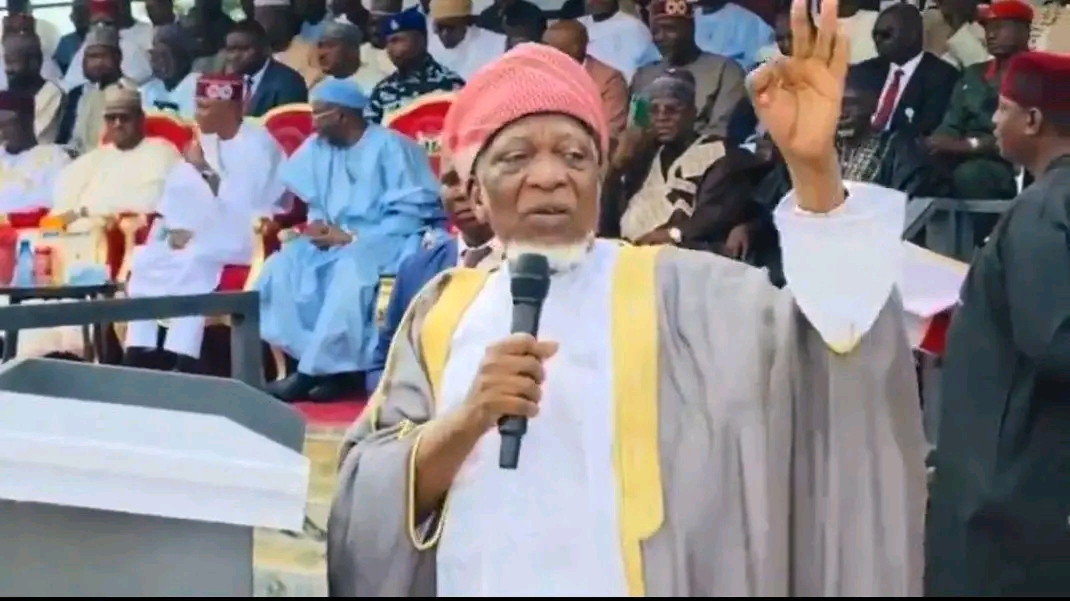
Nigeria’s Ambassador to South Africa, Femi Fani-Kayode, has pushed back against controversial remarks by Islamic scholar Sheikh Yahaya Jingir, who claimed that Nigeria belongs to Muslims, sparking fresh debate over religion and politics in the country.
Jingir’s comment, captured in a viral video from a recent preaching session, stirred strong reactions across social media. In the clip, the cleric declared that those opposed to a Muslim-Muslim political ticket should consider leaving Nigeria, asserting that the country “belongs” to Muslims. The statement drew swift criticism, particularly from Christian groups and other Nigerians who described it as divisive and exclusionary.
Responding on Sunday via his official X (formerly Twitter) account, Fani-Kayode described the cleric’s remarks as “unhelpful, untrue and highly provocative,” warning of the potential consequences of such rhetoric in a religiously diverse nation.
“It is a very slippery and dangerous slope to take and is best avoided,” the former Minister of Aviation said. “Nigeria is NOT a Muslim country and neither is she a Christian country. She is a secular and multi-religious state comprising both Christians and Muslims in equal numbers, and that is our strength.”
Fani-Kayode’s reaction reflects broader concerns about maintaining national unity in a country often shaped by religious and ethnic sensitivities. Analysts say statements that appear to elevate one faith above another risk deepening existing divisions and undermining efforts at peaceful coexistence.
The ambassador also addressed the ongoing discourse surrounding President Bola Tinubu’s Muslim-Muslim ticket, which has remained a subject of political and public scrutiny. According to him, the growing acceptance of the ticket is not rooted in religious alignment but in the perceived competence and credibility of the candidates.
“The acceptance is based on the calibre, ability, sincerity of purpose, character, utility and electoral strength of the presidential and vice-presidential candidates, and their ability to deliver—not because they are Muslims,” he stated.
He added that Nigeria’s democratic evolution could, in the future, produce different political combinations, including a Christian-Christian ticket, emphasizing that leadership choices should not be confined by religious identity.
The exchange highlights the continuing sensitivity of religion in Nigeria’s political landscape, where leaders and public figures are often urged to exercise caution in their public statements to preserve the country’s fragile unity.
As reactions continue to trail Jingir’s remarks, many Nigerians have renewed calls for tolerance, mutual respect, and a stronger commitment to the constitutional principle of secularism that underpins the nation’s identity.
Leave a comment
Your email address will not be published. Required fields are marked *