

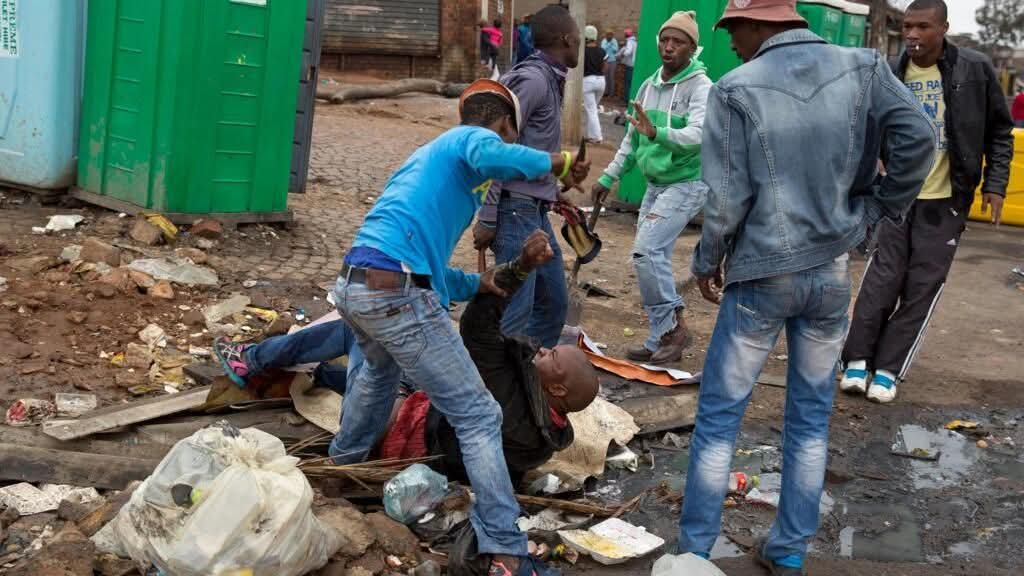
Consul-General says attacks are driven by economic pressures, not hatred of foreigners, as he acknowledges fears among Nigerians
South Africa’s Consul-General, Prof. Bobby Moroe, has pushed back against growing concerns over xenophobic violence in his country, insisting that foreigners, including Nigerians, are not being systematically targeted.
Speaking during an interview on Nigeria Info FM, Moroe firmly rejected the characterization of recent attacks as xenophobia, stating unequivocally, “There is no xenophobia in South Africa.”
His comments come amid renewed anxiety among Nigerians following reports of attacks on foreign nationals, often linked to tensions around immigration and economic hardship.
During the interview, the host highlighted fears among Nigerians, noting that previous incidents widely described as xenophobic had left lasting scars. The concern, he said, was that current attacks were being downplayed as issues related only to illegal migration.
In response, Moroe argued that such incidents should be viewed through the lens of economic struggle rather than hatred for foreigners. He drew parallels with Nigeria’s own history, referencing the “Ghana Must Go” era, when thousands of Ghanaians were expelled.
According to him, those actions were motivated by economic pressures, not hostility toward outsiders.
“We only said they should go back to their country because, you know, we wanted a better economy for ourselves,” he said, suggesting similar dynamics may be at play in South Africa today.
Despite his stance, the Consul-General acknowledged that Nigerians have legitimate reasons to feel uneasy, given past experiences.
“Your concerns are genuine,” he admitted, while stressing that the South African government does not support any form of abuse or violence against individuals, regardless of their nationality or immigration status.
“As a government, we condemn abuse of any individuals, whether South African or foreigner, even if you are illegal. Whether you are legal or illegal, you have a right according to the South African Constitution for protection,” Moroe said.
He further explained that many South Africans are grappling with serious socio-economic challenges, including high unemployment, inequality, and poverty—factors he believes are fueling tensions in some communities.
However, he emphasized that violence is not an acceptable response.
Moroe also raised concerns about the global perception of South Africa, arguing that the term “xenophobia” is too readily applied to the country.
“The nomenclature xenophobia has become synonymous with South Africa. If it happens in other countries… it is not given the name xenophobia, it’s called something else,” he said.
His remarks are likely to spark debate, particularly among communities and observers who have long described attacks on foreign nationals in South Africa as xenophobic.
For many Nigerians living in or planning to travel to South Africa, the assurance of protection under the law may offer some comfort. However, lingering fears remain, shaped by years of recurring incidents and strained relations between locals and migrant communities.
As discussions continue, Moroe’s comments underscore a broader challenge: balancing economic realities with the need to ensure safety, dignity, and coexistence for all who call South Africa home.
Leave a comment
Your email address will not be published. Required fields are marked *