

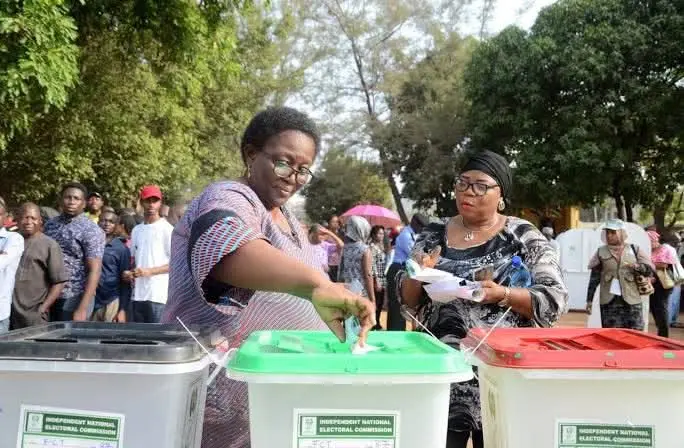
New poll reveals strong voter intention, regional disparities, youth disengagement, and mixed confidence in INEC ahead of the 2027 general elections.
A new nationwide survey released by Yiaga Africa has revealed that while a strong majority of Nigerians intend to participate in the 2027 general elections, deep concerns over electoral violence, trust in the electoral process, and low awareness of recent reforms could significantly shape voter turnout and choices.
According to the survey, 77 per cent of Nigerians say they intend to vote in 2027, reflecting sustained public interest in the democratic process. However, this optimism is tempered by widespread anxiety, as 42 per cent of respondents expressed fear of electoral violence, underscoring persistent security challenges surrounding elections in the country.
The survey shows notable regional variations in voter intention. The North-West recorded the highest intention to vote at 67 per cent, followed by the North-East at 45 per cent. In contrast, turnout intention appears significantly lower in the southern regions, with the South-South at 29 per cent and the South-East recording the lowest at 25 per cent.
Yiaga Africa noted that these disparities point to differing political climates, security perceptions, and levels of confidence in the electoral process across the zones.
What Will Drive Voting Choices
When asked what would most influence their voting decisions in 2027, respondents highlighted three key factors. Security situation and quality of candidates jointly ranked highest at 21 per cent each, while economic conditions followed closely at 17 per cent. The findings suggest that Nigerians are prioritising both personal safety and leadership competence, alongside economic realities, in determining their electoral choices.
Trust and Distrust in INEC
Public confidence in the Independent National Electoral Commission (INEC) remains divided. The survey found that 45 per cent of Nigerians have confidence in INEC’s ability to conduct credible elections. However, distrust is particularly high in parts of the South, with 50 per cent of respondents in the South-South and 55 per cent in the South-East expressing a lack of confidence in the electoral body.
Youth Paradox and Civic Attitudes
One of the most striking findings is what Yiaga Africa describes as a “youth paradox.” Despite their numerical strength, young Nigerians aged 18 to 35 are less likely to vote than middle-aged citizens between 36 and 60 years. Nearly half of young voters (48 per cent) view politics as transactional, suggesting disillusionment and scepticism about the impact of their participation.
In contrast, 68 per cent of elderly voters see elections as a responsibility, reinforcing a stronger sense of civic obligation among older Nigerians. Overall, 60 per cent of respondents nationwide view voting as a civic duty rather than a personal choice.
Low Awareness of Electoral Reforms
The survey also revealed a major information gap, with 76 per cent of Nigerians unaware of recent electoral reforms. Yiaga Africa warned that this lack of awareness could undermine public trust and limit the potential benefits of reforms designed to improve transparency and credibility.
What Could Boost Turnout
Respondents identified improved security as the most critical factor that could increase voter turnout in 2027, cited by 67 per cent. This was followed by the emergence of more credible candidates (43 per cent) and improved INEC logistics (35 per cent).
Yiaga Africa concluded that while Nigerians remain interested in voting, addressing insecurity, rebuilding trust in electoral institutions, engaging young voters, and increasing public awareness of reforms will be crucial to achieving a credible and inclusive 2027 general election.
Stay Updated with the Latest News – Follow Daily Observer on X (formerly Twitter) @DailyObserverNG
Leave a comment
Your email address will not be published. Required fields are marked *