

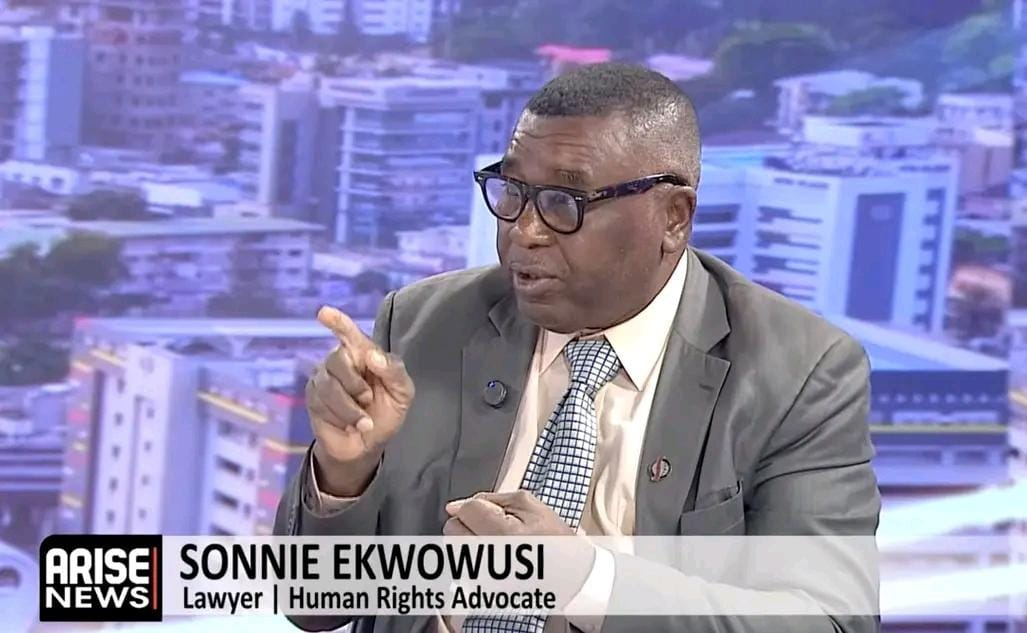
Human rights lawyer says sexuality education in Nigerian schools threatens cultural and moral values, urging parents to take the lead in teaching children about sex and sexuality.
Human rights lawyer and activist, Sonnie Ekwowusi, has strongly criticised the teaching of comprehensive sexuality education in Nigerian schools, describing the programme as “anti-Africa, anti-culture and anti-common sense.”
Ekwowusi made the remarks during an interview on ARISE News on Sunday while expressing concern over the content and implementation of sexuality education programmes in Nigerian schools.
According to him, his opposition to the programme is rooted not in religion but in the need to protect Nigeria’s cultural values and the moral development of children.
“Of course it’s not religious, it’s from the cultural point of view because every society, every country has its own culture and culture is the centre, the foundation of building a society or building a country because once you destroy the culture of the people, you have destroyed everything,” he said.
Ekwowusi questioned the appropriateness of exposing young children to certain aspects of comprehensive sexuality education, arguing that children in primary school are too young for some of the subjects contained in the programme.
He alleged that some of the materials could encourage children to engage in practices he considers inappropriate and harmful to their moral development.
“We are saying that these kids are young kids, in years one, years two, and introducing this comprehensive education that is not just not for the purpose of education, it’s just to corrupt their morals, to make them practice masturbation, abortion, sterilisation,” he said.
“We are saying that this is anti-Africa, this is anti-culture, this is anti-common sense. We want to put it that way. These are kids.”
Foreign organisations raise concerns
The activist also questioned the involvement of foreign organisations in the implementation of sexuality education programmes in Nigerian schools.
He expressed concern that such organisations could gain access to children and introduce materials that, in his view, are inconsistent with Nigerian cultural expectations.
“So we’re also concerned because this is implemented by foreign organisations, you know, that are not really, you know, should be not working in Nigeria. They go to these schools and they make them have access to all these things,” he said.
Ekwowusi argued that the issue goes beyond morality, warning that what children are exposed to during their formative years could have long-term consequences for the country.
“We are saying, as very good stakeholders, that this should not happen because you are destroying the human capital, you are destroying the future generation, I mean, people who are going to be at the helm of affairs in the future,” he said.
Calls for greater focus on moral education
Rather than introducing what he described as inappropriate sexuality-related content in schools, Ekwowusi said greater emphasis should be placed on character and moral development.
“What you should tell them is moral formation. That’s what we all grew up with,” he said.
He recalled his own experience in primary and secondary school, saying students were traditionally taught values and character formation.
According to him, children between the ages of 10 and 11 are impressionable and should not be exposed to messages that could influence their understanding of sexual behaviour prematurely.
“It is terrible. It is not acceptable because it does counter to our values, it does counter to our morals, it does counter to our culture, and it’s completely not acceptable,” he said.
Ekwowusi cites Burkina Faso
Ekwowusi also cited Burkina Faso as an example, questioning why Nigeria should continue to permit what he described as foreign-backed sexuality education programmes in schools.
“In Burkina Faso, for instance, Burkina Faso president has expelled all these organisations that are introducing these things in Burkina Faso. Why do we continue to allow this thing to be taught in our schools?” he asked.
He maintained that parents should have the primary responsibility for discussing sex and sexuality with their children, rather than leaving such matters entirely to schools.
“The issue about sex or whatever, or sexuality, should be taught by the parents at home. This is their business,” he said.
“Not to bring it to schools and teach them how to wear the condoms, how to do this. This is completely unacceptable. And we are saying, look, it should stop. It’s not that it has not been introduced, it’s already introduced.”
Recalls previous legal dispute
Ekwowusi further disclosed that opposition to the curriculum had been ongoing for several years and had previously resulted in a legal dispute.
According to him, the matter was eventually settled out of court after concerns were raised about some of the content.
“You know, there was a time that we went to court on this, and in fact, the thing was settled out of court, because when the chief registrar of the Federal High Court saw the content, and the judge also saw the content, we decided to settle it out of court,” he said.
He claimed that the parties subsequently agreed that some of the disputed material would be removed.
“We settled it out of court, because they said, okay, we drew some of the bad content. We moved them,” he said.
Ekwowusi, however, expressed frustration that the programme was allegedly being implemented again in public schools.
“We are surprised that they’ve gone back and started doing their business,” he said.
His comments come amid continuing debates in Nigeria over how sexuality education should be structured, who should deliver it, the age at which different topics should be introduced, and the balance between public health education, parental responsibility and cultural values.
Leave a comment
Your email address will not be published. Required fields are marked *