

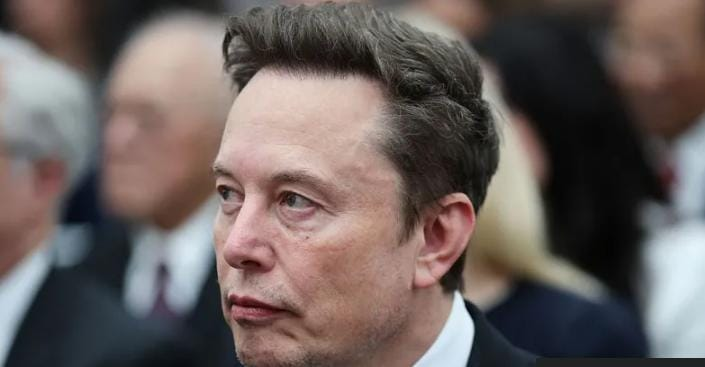
The billionaire’s record-breaking campaign spending could not prevent Republican losses, raising fresh questions about the future of his businesses and the tech industry under a Democratic-controlled Congress.
Elon Musk’s nearly $450m spending spree to support Republican candidates in the 2026 US midterm elections has failed to prevent a major Democratic victory, marking one of the most expensive political interventions by an individual in American election history.
Despite pouring money into races across several states, Musk’s preferred candidates suffered significant losses, including in Texas, where Democrat James Talarico defeated Republican Ken Paxton in the Senate race.
According to a report analysis of campaign finance records, Musk spent at least $45m supporting Paxton alone, with millions more directed towards Republican candidates in Arizona, Michigan, Wisconsin, and Minnesota.
His political spending continued until Monday, just before the election.
By Tuesday night, Musk appeared to acknowledge the setback, joking on X that his election-interfering space lasers didn’t work.
The Democratic gains could have far-reaching consequences for Musk’s business interests, particularly SpaceX and its growing relationship with the US government. The company has secured an estimated $10bn in new government contracts since Donald Trump returned to the White House.
However, Democratic lawmakers have called for greater scrutiny of its expanding role in government and national security.
Musk’s plans to develop large-scale data centres could also face increased resistance, as several politicians campaigned against their rapid expansion and the tax incentives offered to technology companies.
ALSO READ: Trump Rejects Blame for Republican Midterm Losses, Says Candidates Failed to Inspire Voters
The election results may also signal tougher oversight of the wider technology and artificial intelligence industry.
Data centres, which provide the computing infrastructure behind platforms such as ChatGPT, Claude, X, and xAI’s Grok, have become a growing political issue.
In Georgia, the newly elected Democratic governor campaigned on limiting the expansion and the tax breaks associated with their construction. Several state-level measures aimed at restricting data centre development also passed on Tuesday. Musk responded by suggesting that building data centres in space was becoming an attractive option.
The political shift has unsettled investors, with AJ Bell Investment Solutions chief James Flintoft warning that Musk’s unsuccessful spending and the scale of Democratic victories could create uncertainty over future regulation of technology companies. Although technology stocks broadly rose on Wednesday morning, Tesla and SpaceX shares fell by 4.9% and 3.4%, respectively.
Democratic Senator Ed Markey also signalled possible investigations into major technology executives, joking that lawmakers would need new forests to print all the subpoenas.
Musk had focused much of his political attention on Texas, where Tesla and SpaceX have their corporate headquarters, despite maintaining major operations in California.
He had publicly criticized Talarico, who responded that the political system was flawed if one billionaire could effectively buy a Senate seat.
Following the results, Musk stopped posting about politics as frequently, removed a pinned post warning about Democratic victories, and appeared to delete an earlier appeal urging his 241 million X followers to vote Republican.
Meanwhile, Democratic donor and LinkedIn co-founder Reid Hoffman celebrated the results as a major rejection of Trump and his political allies.
:
:
For news placements, adverts and other sponsorship, contact Daily Observer on: ( dailyobservermedia@gmail.com or +2348162850062 )
Leave a comment
Your email address will not be published. Required fields are marked *