

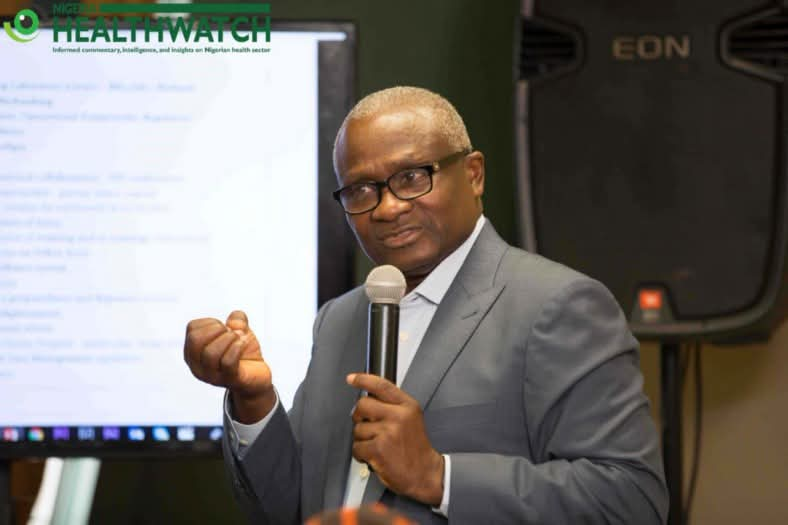
Jide Idris says Tinubu-approved intervention was released to NCDC to strengthen Nigeria’s response to epidemic threats, including Lassa fever, cholera and diphtheria, as he confirms no active Ebola case in the country.
The Director-General of the Nigeria Centre for Disease Control and Prevention (NCDC), Dr Jide Idris, has clarified that the controversial N10bn emergency intervention fund approved by President Bola Tinubu was not exclusively meant to tackle Ebola Virus Disease but to strengthen Nigeria’s preparedness for multiple disease outbreaks.
Idris explained that the funding was designed to improve the country's capacity to prevent, detect and respond swiftly to public health emergencies, including Lassa fever, cholera, cerebrospinal meningitis, diphtheria, measles, monkeypox and antimicrobial resistance.
He made the clarification amid growing public debate over the purpose and management of the N10bn allocation, stressing that the money was released directly to the NCDC and not to the Presidential Task Force on Ebola, as suggested in some public discussions.
The NCDC chief, however, did not disclose the exact date the money was eventually released, despite having told journalists at a press conference on October 25, 2026, that the agency had yet to receive the funding.
According to Idris, the intervention followed President Tinubu's approval in June 2026, after an Ebola outbreak in the Democratic Republic of Congo triggered international health concerns.
He maintained that although the outbreak heightened the urgency for emergency funding, the request submitted to the President covered Nigeria's broader health security needs rather than Ebola alone.
“In June 2026, as the outbreak in the Democratic Republic of the Congo became a global emergency, Mr President graciously approved a further N10 billion in emergency intervention funding. That fund was requested for all our epidemic-prone diseases, not Ebola alone,” Idris said.
He added that the funding would strengthen existing efforts supported by government allocations and development partners.
The NCDC director-general also warned that Nigeria's investment in health security remained far below what was required to protect its growing population against infectious disease outbreaks.
He disclosed that implementing the country's National Action Plan for Health Security, covering 2025 to 2029, would require approximately N522bn over five years.
This translates to an average annual funding requirement of N104.4bn, meaning the N10bn emergency intervention represents only about two per cent of the estimated yearly cost of implementing the plan.
Idris noted that Nigeria, with a population of more than 240 million, needed sustained financial commitments from federal and state governments, alongside development partners, to effectively prepare for and contain epidemic threats.
Providing details of government funding for health security, he said the NCDC received N4bn in 2024, while its allocation increased to N7bn in 2025, alongside an additional N5bn intervention fund.
For 2026, he disclosed that the agency's appropriation stood at N22bn, apart from the N10bn emergency intervention approved by the President.
He further cited estimates by the Global Preparedness Monitoring Board, which suggest that countries require between $1 and $2 per person annually to maintain an acceptable level of epidemic preparedness.
Based on Nigeria's estimated population of 240 million, Idris said the country would need between $240m and $480m annually to meet that benchmark.
He argued that the debate over the N10bn should go beyond political disagreements and focus on the urgent need to adequately fund the country's health security system.
According to him, investing in prevention and early detection is far less costly than dealing with the devastating human and economic consequences of uncontrolled disease outbreaks.
NCDC Gives Update on Ebola Situation
On the Ebola situation, Idris confirmed that Nigeria recorded its first imported case of Bundibugyo Ebola Virus Disease, with laboratory confirmation obtained on October 20, 2026, less than 24 hours after the agency received an alert in Abuja.
He, however, assured Nigerians that there was no active Ebola case in the country as of the time of his statement.
The NCDC boss said identified contacts of the confirmed case were being monitored daily, adding that surveillance would continue until the last contact completes the mandatory 21-day monitoring period without developing symptoms or another case emerging.
He also dismissed calls for election postponement, travel restrictions and a blanket ban on public gatherings, insisting that the prevailing situation did not justify such extreme measures.
Instead, the agency had developed technical guidelines for organisers of mass gatherings, with emphasis on strict compliance with infection prevention and control measures.
Idris maintained that public events could continue safely if organisers and participants observed the necessary health precautions.
He urged Nigerians to rely on verified information and avoid spreading rumours about the Ebola situation, warning that misinformation and the politicisation of public health emergencies could undermine public confidence and weaken the country's response efforts.
He stressed that protecting Nigerians against epidemics required consistent investment, effective surveillance and cooperation across all levels of government.
Leave a comment
Your email address will not be published. Required fields are marked *