

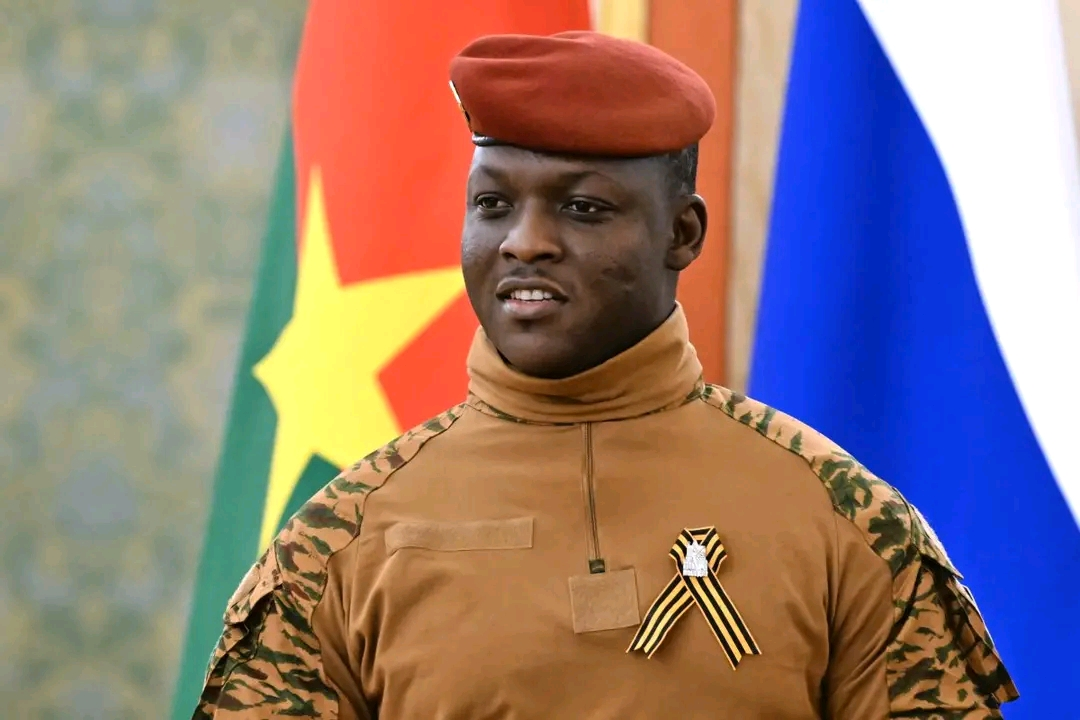
Junta leader dismisses multiparty politics as divisive, tightens grip amid rising civilian deaths and growing regional support
Burkina Faso’s military ruler, Captain Ibrahim Traoré, has openly rejected democracy, declaring it harmful and unsuitable for his country, in a statement likely to intensify global concern over governance and human rights in the West African nation.
In a televised interview on state media, the 38-year-old junta leader said democracy was not a viable system for Burkina Faso, urging citizens to abandon it altogether. “People need to forget about the issue of democracy. Democracy is not for us,” Traoré said, adding that political parties fuel division and instability.
Traoré, who seized power in a 2023 coup, has since dismantled key democratic structures, including banning political parties and extending military rule for five years. His administration has positioned itself as pursuing a distinct governance model, separate from Western democratic ideals.
The junta has also shifted Burkina Faso’s foreign policy, strengthening ties with Russia as it battles a persistent Islamist insurgency that has destabilized large parts of the country. The government argues that its approach is necessary to restore security, but critics say it has come at a steep human cost.
Human Rights Watch reports that more than 1,800 civilians have been killed since Traoré took power, with the majority of deaths attributed to government forces and allied militias. The rights group has raised alarm over increasing repression, including crackdowns on opposition figures and the media.
Despite mounting international criticism, Traoré has built a significant following across parts of Africa, where his pan-Africanist messaging and strong rejection of Western influence resonate with segments of the population frustrated by longstanding insecurity and foreign intervention.
His latest remarks are expected to further deepen debates about governance, security, and sovereignty in the Sahel region, where military-led governments are increasingly challenging democratic norms.
Leave a comment
Your email address will not be published. Required fields are marked *