

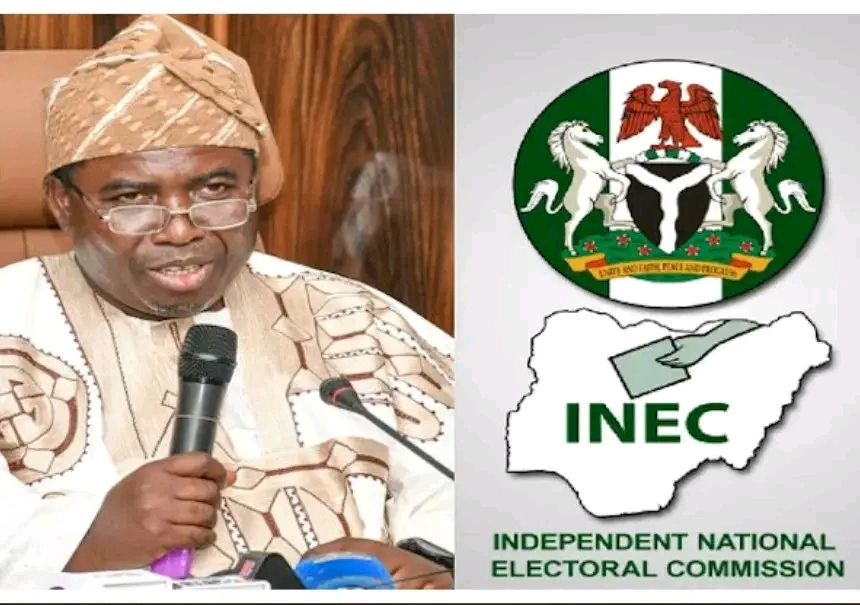
Electoral commission says hate speech, threats, inflammatory rhetoric and language capable of provoking violence could attract criminal and administrative sanctions under the Electoral Act 2026.
As Nigeria begins to gear up for the 2027 general elections, the Independent National Electoral Commission (INEC) has warned political parties and their candidates against using abusive, inflammatory or threatening language during campaigns.
The Commission said politicians who cross the line from legitimate political criticism into hate speech, intimidation, threats or language capable of provoking violence could face significant financial penalties and imprisonment under the Electoral Act 2026.
Chief Press Secretary/Media Adviser to the INEC Chairman, Adedayo Oketola, gave the warning in a telephone interview with our correspondent on Sunday, stressing that political campaigns must remain within the boundaries of the law.
Oketola explained that political rhetoric becomes punishable when it moves beyond normal partisan debate or criticism of government policies and begins to threaten, intimidate or incite people against individuals or groups.
He said this could include statements designed to provoke ethnic, religious or regional hostility, as well as threats intended to force voters or political opponents into supporting or abandoning a particular candidate.
“Under the Nigerian legal framework, rhetoric becomes punishable intimidation when it incites ethnic, religious, or regional hostility through abusive, base, or slanderous language explicitly designed to provoke violent emotions or target specific groups,” Oketola said, citing Section 96 of the Electoral Act 2026.
He quoted the law as stating that:
“A political campaign or slogan shall not be tainted with abusive language directly or indirectly likely to injure religious, ethnic, tribal or sectional feelings.”
The law, according to Oketola, also prohibits the use of “abusive, intemperate, slanderous or base language, insinuations, innuendoes designed or likely to provoke violent reaction or emotions” during political campaigns.
When campaign rhetoric becomes intimidation
Oketola said the law does not prevent politicians from engaging in robust political debates or criticising their opponents. However, he noted that such criticism becomes unlawful when it is accompanied by threats or language intended to create fear.
He explained that intimidation could occur where politicians directly or indirectly threaten voters, candidates or electoral officials with physical violence, economic retaliation, eviction or other forms of punishment in an attempt to influence their political choices.
He also warned against campaign messages designed to discourage people from participating in elections or to create fear among particular communities or demographic groups.
According to him, political campaigns should not create an atmosphere in which voters feel unsafe or believe that exercising their democratic rights could expose them to retaliation.
INEC clarifies enforcement role
While acknowledging growing concerns over inflammatory political statements ahead of the 2027 elections, Oketola clarified that INEC is primarily an election management institution and not a security agency.
He, however, said the Commission has statutory responsibilities to monitor political campaigns and ensure that political parties comply with relevant provisions of the Electoral Act and the Code of Conduct for Political Parties.
He also pointed to Section 95 of the Electoral Act 2026, which provides for the security arrangements surrounding political rallies and outlines the operational roles of the Nigeria Police Force, the Nigeria Security and Civil Defence Corps (NSCDC) and other relevant security agencies.
“Beyond inter-agency security coordination, INEC is statutorily empowered to monitor political campaigns and enforce compliance with the Code of Conduct for Political Parties. The Commission can issue formal queries and sanction non-compliant parties within its administrative limits,” he said.
Candidates risk jail, parties face ₦10m fine
Oketola said the Electoral Act provides specific penalties for individuals and political parties found guilty of prohibited campaign conduct.
According to him, Section 96(7) of the Electoral Act 2026 provides that a candidate convicted of the offences could be fined up to ₦5 million or sentenced to 12 months in prison.
“Any candidate who commits these offences is liable upon conviction to a maximum fine of ₦5,000,000 or imprisonment for a term of 12 months,” he said.
Political parties could face even heavier financial sanctions.
“A non-compliant political party is liable to a fine of ₦10,000,000 in the first instance, and ₦2,000,000 for each subsequent offence,” Oketola added.
The provisions are expected to put political parties and candidates on notice as campaigns and political mobilisation intensify ahead of the 2027 elections.
INEC seeks cooperation of security agencies, media
Oketola stressed that maintaining peaceful elections cannot be left to INEC alone.
He said security agencies have a responsibility to prevent campaign activities from degenerating into violence and to act where political actors threaten public safety.
“The Nigeria Police Force and other security agencies have a clear duty to prevent the breakdown of law and order during political campaigns,” he said.
He also called on the media to take its watchdog responsibilities seriously by drawing public attention to incendiary statements and holding politicians accountable for their rhetoric.
Traditional and religious leaders, he added, have an important role to play because of their influence within communities.
Oketola urged such leaders to use their moral authority to encourage political actors to avoid inflammatory statements that could deepen existing divisions or trigger violence.
Warning comes amid rising political tension
The INEC warning comes amid growing political tensions across the country as political parties and prospective candidates begin positioning themselves for the 2027 general elections.
In recent weeks, concerns have been raised over statements attributed to some highly placed political figures, with critics accusing sections of the political elite of using threats of violence, eviction and other forms of retaliation against voters, opponents and residents perceived to hold dissenting views.
The development has drawn criticism from civil society organisations, rights groups and opposition politicians, who have called for greater accountability and enforcement of laws governing political campaigns.
With the 2027 elections still ahead, INEC's latest position signals an attempt to draw a clear line between vigorous political competition and rhetoric that could undermine public safety, intimidate voters or inflame ethnic and religious tensions.
The Commission's message is that political disagreements are an expected part of democratic politics, but threats, hate speech and language capable of provoking violence could have consequences under Nigeria's electoral laws.
Leave a comment
Your email address will not be published. Required fields are marked *