

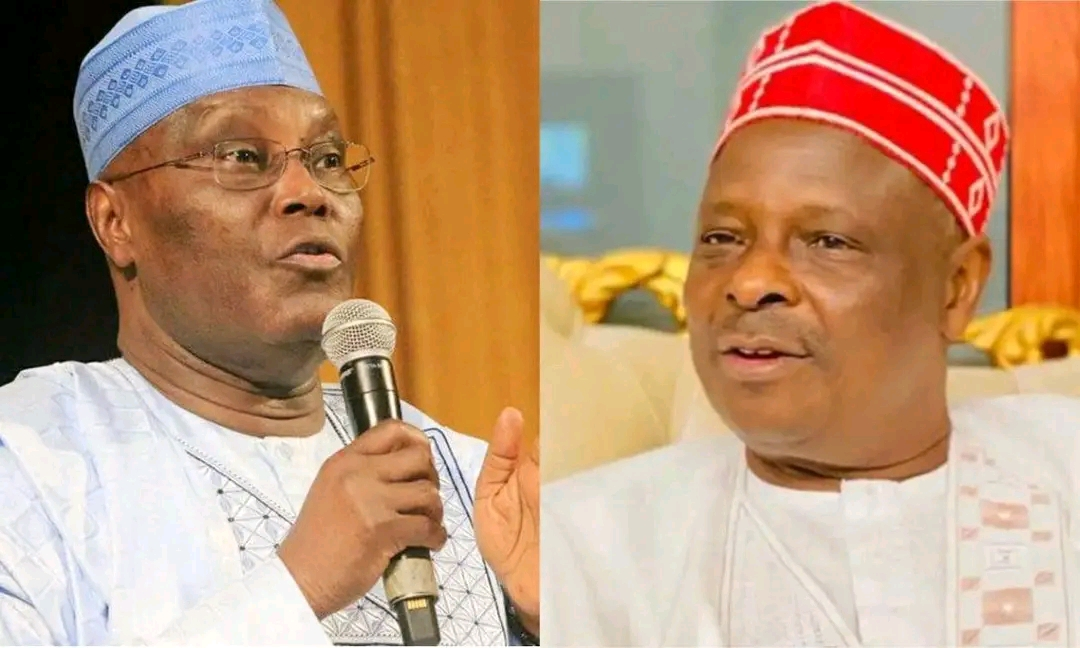
Competing alliances, Obi factor, and shifting loyalties threaten unified northern bloc ahead of presidential race
Fresh political permutations ahead of the 2027 presidential election are fueling intense debate across northern Nigeria, as key political figures appear set to pursue divergent strategies that could fracture the region’s traditional voting bloc.
At the centre of the unfolding scenario are former Vice President Atiku Abubakar and ex-Kano State Governor Rabiu Musa Kwankwaso, whose potential bids on separate platforms are already raising concerns among stakeholders about a divided North.
The situation is further complicated by ongoing talks of a possible alliance between Kwankwaso and Labour Party’s Peter Obi, while Atiku is expected to press ahead with his ambition independently, yet to unveil a running mate.
Commenting on the emerging alignments, ADC chieftain Adnan Mukhtar Tudun Wada warned that the North could witness a fragmented voting pattern in 2027 due to competing interests and alliances.
He argued that Kwankwaso’s political strength remains largely concentrated in Kano State, unlike Atiku, whose influence cuts across multiple northern states.
“Kwankwaso’s dominance is essentially Kano-based. The last election made that clear, while Atiku’s reach spans the North,” Wada said.
He also suggested that Peter Obi’s potential involvement in a joint ticket with Kwankwaso may face resistance in parts of the North, citing lingering sentiments from the 2023 campaign.
According to him, dissatisfaction with the ruling All Progressives Congress (APC) could push many northern voters toward a regional candidate, though internal divisions may weaken that momentum.
Wada further claimed that speculation about Kwankwaso accepting a vice-presidential role has dampened enthusiasm among some of his supporters.
However, Kano Obidient Coordinator, Barrister Ibrahim Muhammad, offered a contrasting view, predicting a shift in northern voting behaviour driven by a broader opposition coalition.
He acknowledged that while the North may still split its votes, the pattern could differ significantly from 2023 if a strong Obi-Kwankwaso alliance materialises.
“The dynamics will change. Factors like regional base, choice of running mate, and the candidate perceived as most capable of defeating President Bola Tinubu will shape voter decisions,” Muhammad explained.
He also pointed to ongoing discussions involving multiple opposition platforms—including LP, SDP, and APGA—as well as defections from the APC, suggesting a wider coalition could emerge before 2027.
Muhammad added that some northern voters are increasingly viewing Atiku’s moves as driven by personal ambition rather than a collective opposition front.
He projected that a Kwankwaso-Obi ticket could gain traction across key North-West states such as Kano, Kaduna, Katsina, Sokoto, Zamfara, and Jigawa, while Obi’s appeal may extend into parts of the North-East and North-Central.
But not everyone is convinced. Kano-based activist Mamman Buhari dismissed the prospects of both camps, arguing that neither Atiku nor Kwankwaso may ultimately prevail.
He criticised the motivations behind emerging alliances, describing them as driven more by personal interests than cohesive political strategy, while also questioning Atiku’s continued presidential pursuits.
As the 2027 race begins to take shape, the battle for northern support is emerging as a निर्णing factor—one that could either consolidate power or splinter it in unprecedented ways.
Leave a comment
Your email address will not be published. Required fields are marked *