

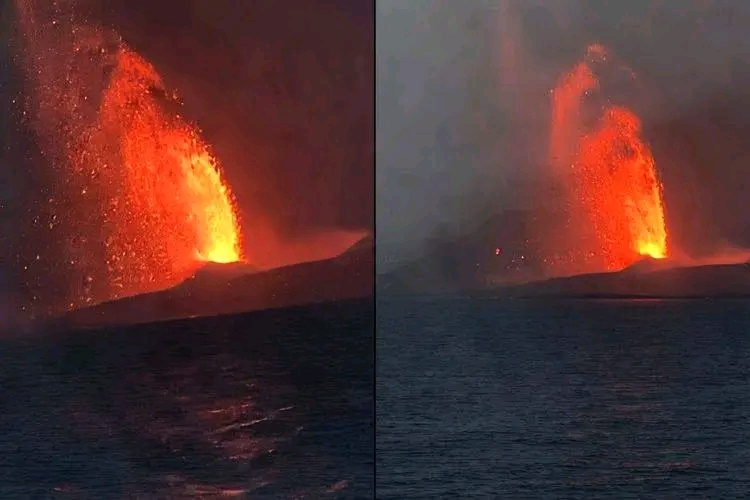
Anak Krakatau, Semeru, Mount Ibu and Ili Lewotolok recorded eruptions or heightened activity on September 6, with authorities urging residents to remain alert.
Indonesia experienced an intense day of volcanic activity on September 6, 2026, as eruptions were reported at four volcanoes across the archipelago, highlighting the ongoing hazards faced by communities living in one of the world's most volcanically active regions.
The volcanoes involved were Anak Krakatau, Mount Semeru, Mount Ibu and Ili Lewotolok, according to reports and monitoring updates from Indonesian authorities.
The simultaneous activity attracted attention because the four volcanoes are located in different parts of the country. However, the timing of the eruptions does not by itself indicate that the volcanoes were connected or that one eruption triggered the others.
Anak Krakatau records prolonged eruptive activity
Anak Krakatau, the volcano that emerged from the caldera of the infamous Krakatau volcano, experienced a prolonged eruptive episode that lasted approximately 25 hours before ending in the early hours of September 6.
The volcano, located in the Sunda Strait between Java and Sumatra, is closely monitored because of its history of explosive activity and its potential to affect surrounding coastal areas.
The 2018 collapse of part of Anak Krakatau's volcanic cone triggered a deadly tsunami that struck communities along the Sunda Strait, killing hundreds of people.
Ili Lewotolok records thousands of seismic events
Further east, Mount Ili Lewotolok in East Nusa Tenggara also remained highly active.
Data cited by Indonesian news agency ANTARA showed that 1,873 eruption-related seismic events were recorded at the volcano between September 1 and 5.
The high level of seismic activity underscores the need for continued monitoring as volcanic unrest can change rapidly.
Authorities routinely track earthquakes, tremors, ash emissions and other signs of activity to assess the risk to nearby communities.
Semeru and Mount Ibu also active
Mount Semeru, Indonesia's highest volcano, also recorded eruptive activity during the period. Located in East Java, Semeru frequently produces eruptions and hot clouds, making it one of the country's most closely watched volcanoes.
Mount Ibu, located on Halmahera Island in North Maluku, was also among the volcanoes reporting activity on September 6.
Mount Ibu has experienced frequent eruptions in recent years, with authorities maintaining restrictions around the volcano because of the risk posed by ash, volcanic material and other eruptive hazards.
No evidence of a single volcanic chain reaction
Although the four volcanoes erupted or showed significant activity on the same day, experts caution against interpreting the coincidence as evidence of a single volcanic event.
Indonesia sits along the Pacific Ring of Fire, a vast zone of intense seismic and volcanic activity surrounding the Pacific Ocean. The country's location at the meeting point of several tectonic plates makes earthquakes and volcanic eruptions a recurring natural hazard.
The volcanoes are also separated by considerable distances, making the simultaneous activity more likely to reflect the country's broader volcanic setting rather than a confirmed chain reaction.
Indonesian authorities continue to monitor the volcanoes and issue safety instructions based on individual conditions at each site.
Residents and visitors in affected areas have been advised to follow instructions from the Center for Volcanology and Geological Hazard Mitigation (PVMBG) and local authorities, particularly regarding exclusion zones, ashfall and possible evacuation orders.
The latest activity serves as another reminder of the powerful geological forces beneath Indonesia and the importance of early warning systems in protecting communities living close to active volcanoes.
Leave a comment
Your email address will not be published. Required fields are marked *