

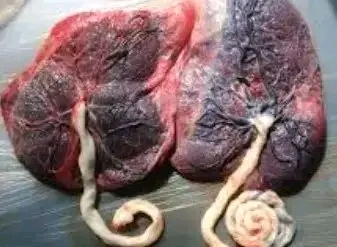
Researchers are studying dehydrated human placenta as a possible treatment to support nerve healing and speed the return of erectile function after prostate cancer surgery.
For men undergoing surgery for prostate cancer, removing the tumour can eliminate the immediate threat posed by the disease. But the operation can sometimes leave another deeply personal challenge: erectile dysfunction.
Now, researchers are exploring an unusual approach that could help some men regain sexual function more quickly — placing thin sheets of dehydrated human placenta around nerves exposed during prostate cancer surgery.
According to a report published by New Scientist, the technique is being investigated as a way to support the delicate nerves involved in erections as they recover from the effects of surgery.
During prostate cancer surgery, the nerves responsible for erectile function can be stretched, bruised or damaged, even when surgeons successfully preserve them. As a result, some men may experience erectile dysfunction for months, while recovery can take considerably longer in others.
The placenta-derived material is being studied as a biological aid to nerve and tissue healing. Placental tissue contains growth factors and other biological components that researchers believe could help promote tissue repair and reduce inflammation around injured nerves.
“To help men get better erections, we’re using donations of placentas from women,” said Shirin Razdan, a surgeon at HCA Florida Kendall Hospital in Miami.
The treatment is based on the idea that protecting and supporting the nerves immediately after surgery could give them a better environment in which to recover.
Some research has produced encouraging early findings. A review involving thousands of prostate cancer operations reported an earlier return of erectile function among men who received placenta-derived treatment.
Some studies have reported erections returning in roughly a week among men who received the intervention, compared with about two weeks among those who did not.
However, researchers say the findings should be interpreted cautiously.
A faster return of erections does not necessarily mean that the treatment restores normal sexual function in every patient. It also does not establish that the placenta material itself is responsible for all of the improvement observed.
Researchers still need to determine whether the approach provides meaningful long-term benefits, including whether men ultimately regain satisfactory erections, how long any improvement lasts and whether it significantly improves quality of life.
Questions about possible risks, costs and the effectiveness of the treatment compared with existing approaches also remain important.
The research is part of growing interest in regenerative treatments designed to reduce some of the side effects associated with cancer treatment.
While advances in prostate cancer surgery have improved cancer control and survival for many patients with localised disease, recovery involves more than simply removing the tumour.
For many men, regaining normal sexual, urinary and social function is also an important part of life after cancer treatment.
For now, the placenta-derived technique remains an emerging approach rather than an established solution for post-surgical erectile dysfunction. Further clinical research will be needed to establish how effective and safe it is and which patients are most likely to benefit.
Leave a comment
Your email address will not be published. Required fields are marked *