

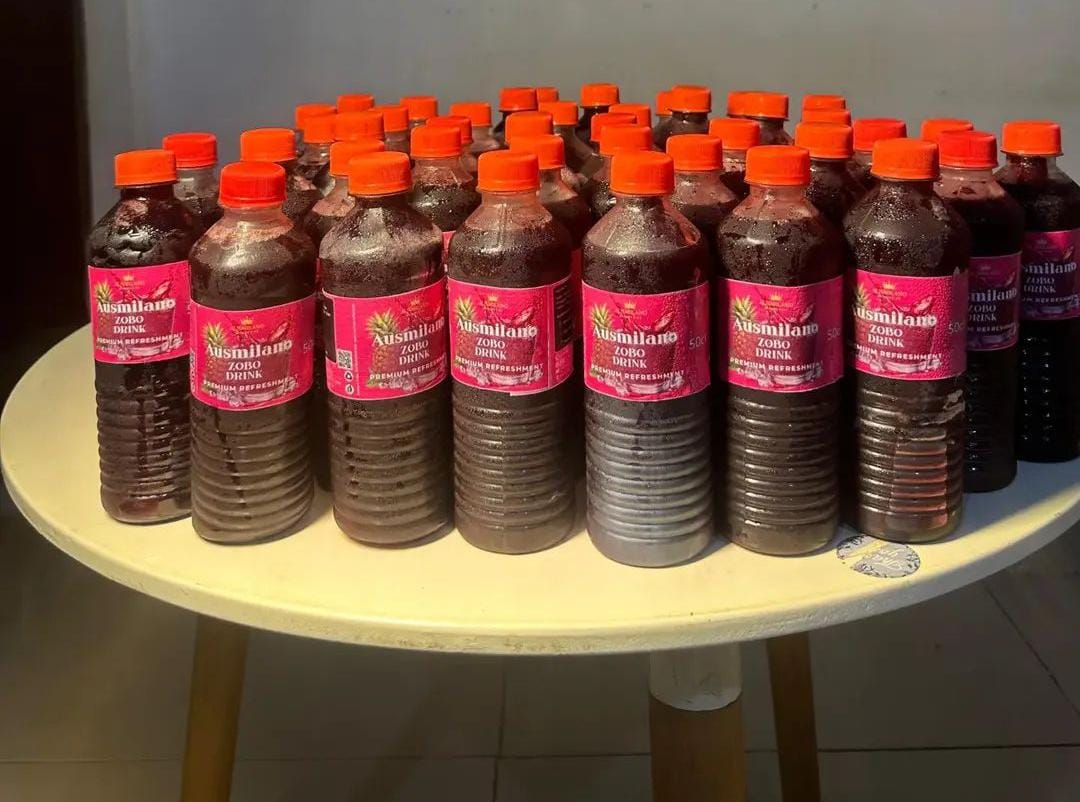
The agency says all locally produced and packaged food and beverages must undergo laboratory testing and safety certification before hitting the Nigerian market, warning that unregistered products risk seizure, factory closure and prosecution.
The National Agency for Food and Drug Administration and Control (NAFDAC) has declared that all locally manufactured and packaged food and beverages, including bottled zobo and tigernut drinks, must be registered with the agency before they can be sold in Nigeria.
The agency stressed that packaging and labelling homemade drinks for commercial sale automatically brings them under its regulatory requirements, regardless of the size of the business or the scale of production.
NAFDAC explained that all packaged food products must undergo safety assessments, including laboratory examinations, to establish that they are fit for human consumption before being released into the market.
The agency's Resident Media and Communication Consultant, Sayo Akintola, disclosed this in an exclusive interview emphasising that the registration process is a critical public health safeguard.
According to Akintola, product samples must be submitted for laboratory testing to verify their safety and ensure that manufacturers' claims about their products are accurate.
"All packaged food products are required to have NAFDAC certify their safety for human consumption. Samples of your products must undergo NAFDAC laboratory testing to ensure that what you claim is food is not poison in disguise. It's the responsibility of the Agency to safeguard the health of the Nation," he said.
Akintola further explained that NAFDAC registration is mandatory for businesses involved in the manufacture, importation, distribution and sale of products under the agency's regulatory control.
He noted that the requirement applies not only to large manufacturing companies but also to small-scale entrepreneurs producing packaged food, beverages, cosmetics, supplements, pharmaceuticals, packaged water and medical devices.
The NAFDAC spokesperson warned that businesses that ignore the registration requirement could face serious regulatory consequences, including the seizure of their products, closure of production facilities and prosecution under relevant federal laws.
He, however, described the registration number as more than a regulatory requirement, saying it also helps businesses establish credibility and gain the confidence of distributors, retailers and consumers.
The clarification comes amid growing public attention following a viral video showing police officers questioning a woman selling bottled zobo drinks and demanding proof of NAFDAC registration.
The video, which circulated on October 28, showed one of the officers insisting that the packaged drinks should carry a valid NAFDAC registration number.
"This thing is supposed to have a NAFDAC number. Does this thing have a NAFDAC number? As a police officer, don't I have the right to ask?" the officer was heard saying.
The incident triggered public discussions about the regulation of locally produced drinks and whether small-scale vendors are required to obtain official certification before selling their products.
Meanwhile, registered dietitians and nutritionists have also raised concerns about the health risks associated with consuming zobo and tigernut drinks prepared or stored in unhygienic environments.
They warned that poor sanitation during production, packaging, transportation and storage could expose consumers to harmful microorganisms capable of causing foodborne illnesses.
Such contamination, they noted, could result in symptoms including diarrhoea, vomiting and abdominal pain.
The health experts consequently urged consumers to be cautious when purchasing locally prepared beverages, particularly products whose production and storage conditions cannot be verified.
NAFDAC's position underscores the importance of food safety in Nigeria's growing informal beverage market, where locally produced drinks remain popular among consumers. While small businesses continue to explore opportunities in the food and beverage industry, the agency insists that commercial packaging and sales must be accompanied by the necessary safety checks and regulatory approval.
Leave a comment
Your email address will not be published. Required fields are marked *