

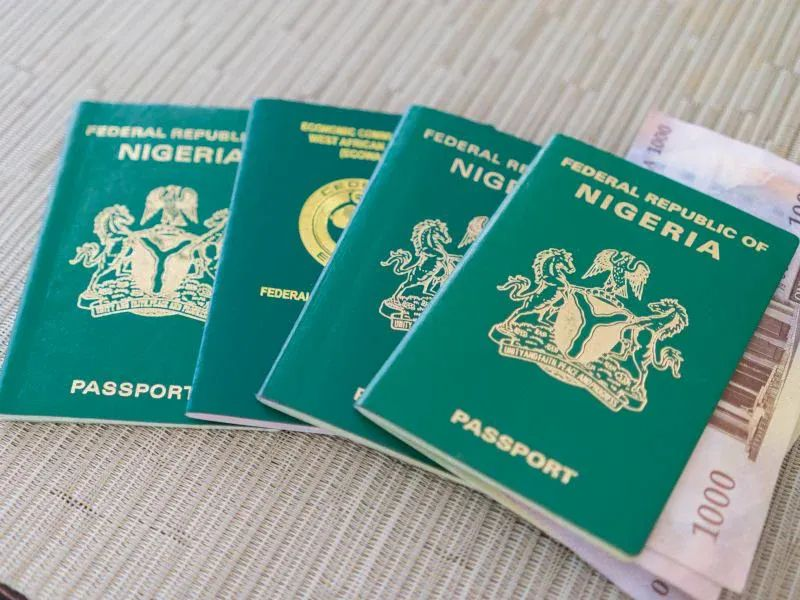
The latest IziVisa Passport Ranking Index places Nigeria near the bottom of its global mobility rankings, reporting a sharp drop in visa-free destinations from 44 to 24, although the index differs from the Henley Passport Index.
Nigeria’s passport has suffered a significant decline in global travel access, dropping to 181st position in the latest IziVisa Passport Ranking Index, as the number of countries Nigerians can visit without obtaining a visa in advance reportedly falls to 24.
The latest ranking, published by IziVisa.com, marks a sharp contrast with Nigeria’s 90th position in July 2026, when the country’s passport was reported to offer visa-free access to 44 destinations.
The development highlights the challenges Nigerian passport holders face when travelling internationally, particularly the need to secure visas before departure to an increasing number of destinations.
According to the latest IziVisa data, Nigerian passport holders can enter 24 countries without a visa, obtain visas on arrival in 16 countries, and apply for electronic visas to access another 43 destinations.
The figures suggest that Nigerians have fewer opportunities for spontaneous international travel, with many destinations requiring additional documentation, applications and approval before a journey can begin.
UAE Tops Global Passport Ranking
While Nigeria struggles with declining travel access, the United Arab Emirates leads the 2026 IziVisa ranking, with its passport offering access to 185 of 198 documented destinations through visa-free entry, visas on arrival or electronic visas.
Switzerland occupies second place, with access to 120 destinations without a visa, 26 offering visas on arrival and another 37 accessible through electronic visas.
Other countries featuring prominently in the ranking include Luxembourg, Malta, Denmark, Spain and Finland.
The wide gap between the highest- and lowest-ranked passports underscores the unequal levels of international mobility available to citizens of different countries.
Passport rankings are commonly used to measure the ease with which citizens can cross international borders. A stronger passport generally reduces the need for advance visa applications, making business trips, tourism, education and family visits easier to arrange.
Henley Index Reports a Different Picture
However, the latest IziVisa figures differ considerably from those published by Henley & Partners, whose July 2026 Henley Passport Index placed Nigeria 90th among 199 passports assessed worldwide, with access to 44 destinations without a prior visa.
That position represented a one-place decline from Nigeria’s 89th position in the April 2026 edition, while its visa-free score remained unchanged at 44 destinations.
The Henley index, which marked its 20th anniversary in 2026, evaluates 199 passports against 227 travel destinations using data from the International Air Transport Association.
The difference between the two reports is significant. Although both assess passport strength and international mobility, they use different methodologies and coverage. Their rankings and access figures should therefore not be treated as directly equivalent.
Consequently, the reported fall to 181st place in the IziVisa index does not, by itself, establish that Nigeria’s ranking has deteriorated by the same magnitude under the Henley methodology.
Nigeria Trails Several African Countries
The Henley Passport Index figures also show Nigeria lagging behind several African countries in international travel access.
South Africa ranked 49th globally, with visa-free access to 101 destinations, while Botswana occupied 61st position with access to 81 destinations.
Morocco ranked 67th, offering access to 71 destinations, followed by Kenya in 68th place with 70 destinations.
Ghana ranked 70th, with visa-free access to 67 destinations.
Nigeria was ranked alongside the Democratic Republic of the Congo and Turkmenistan in the July Henley edition, with each passport providing access to 44 destinations without a prior visa.
The comparison illustrates the considerable differences in passport mobility across Africa, where citizens of some countries enjoy broader international access than others.
What the Ranking Means for Nigerian Travellers
A decline in visa-free access can have practical consequences for Nigerians travelling abroad for tourism, education, employment, business and family engagements.
Advance visa requirements can increase travel costs, extend preparation times and introduce uncertainty, particularly for travellers who must provide supporting documents, attend appointments or wait for approval.
For Nigerian businesses and professionals, restricted mobility can also complicate international meetings, conferences and commercial engagements.
IziVisa says its ranking measures passport strength by examining the destinations holders can access without obtaining a visa beforehand, while also accounting for other forms of access, including visas on arrival and electronic visas.
The latest report places Nigeria near the bottom of its global ranking, raising fresh questions about the country's international travel access.
However, the difference between the IziVisa and Henley figures makes it important to distinguish between the rankings rather than interpret them as a single, directly comparable measure of Nigeria’s passport performance.
Leave a comment
Your email address will not be published. Required fields are marked *