

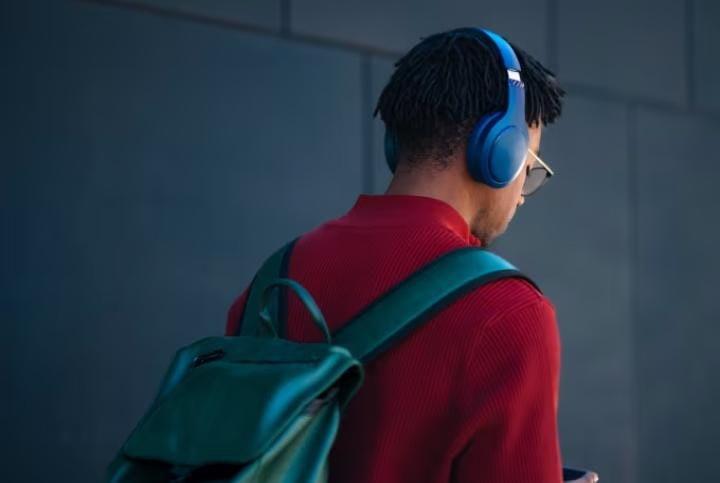
Researchers say constant listening to music and podcasts may cause people to miss everyday social interactions, struggle with silence and pay less attention to their surroundings, while loud volumes can damage hearing.
For many young adults, headphones have become an essential part of daily life, filling commutes, work hours and household chores with music or podcasts.
But experts are warning that the habit, while seemingly harmless, may reduce opportunities for human connection, limit awareness of the environment and make it harder to spend time alone with one’s thoughts.
A May poll made by Research found that people aged 13 to 34 spend an average of 4.5 hours daily listening to audio content.
At 24, New Yorker Atira Gali is among those who rarely go without headphones.
By mid-November last year, her Spotify annual recap showed she had listened to 33,500 minutes of music.
She said she often listens while commuting, working and completing chores, explaining that audio makes routine tasks more enjoyable. Now, she has begun questioning whether the habit is making it harder to carry out everyday activities without music.
Researchers say constantly wearing headphones can unintentionally create a barrier between people and those around them. Dr Gloria Mark, a professor of informatics at the University of California, Irvine, said people may use headphones to shield themselves from others, even when that is not their intention.
Richard Davidson, director of the Center for Healthy Minds at the University of Wisconsin–Madison, warned that students and other young adults could miss valuable opportunities to meet new people and build relationships through ordinary encounters.
Beyond social interaction, experts say constant audio stimulation may make silence and boredom increasingly uncomfortable. Mark argued that moments without digital distractions can allow people to reflect, let their minds wander and become more aware of their surroundings.
Davidson added that music and phone use may provide temporary relief from unwanted thoughts but do not necessarily address the underlying feelings once the distraction ends.
Gali experienced a change when she decided to walk to work without listening to music.
Within two days, she noticed four signs advertising new businesses in her neighbourhood, details she had overlooked despite taking the same route regularly.
The experience prompted her to consider whether leaving her headphones behind could help her feel more present in everyday life. Experts suggest that deliberately spending some time without audio or phone distractions may help people notice their environment and become more open to spontaneous interactions.
There are also physical risks associated with excessive headphone use, particularly at high volumes.
The National Institute on Deafness and Other Communication Disorders reports that hearing loss affects a substantial proportion of American adults, while prolonged exposure to sounds at or above 85 decibels can cause lasting damage. Experts say people do not necessarily need to abandon headphones, but taking breaks, keeping the volume low and making room for quiet moments may help protect both hearing and everyday social connection.
Leave a comment
Your email address will not be published. Required fields are marked *