

Elon Musk says the two-seat electric sports car could enter production in 2028, but experts question whether its dramatic demonstration proves it can achieve sustained flight.
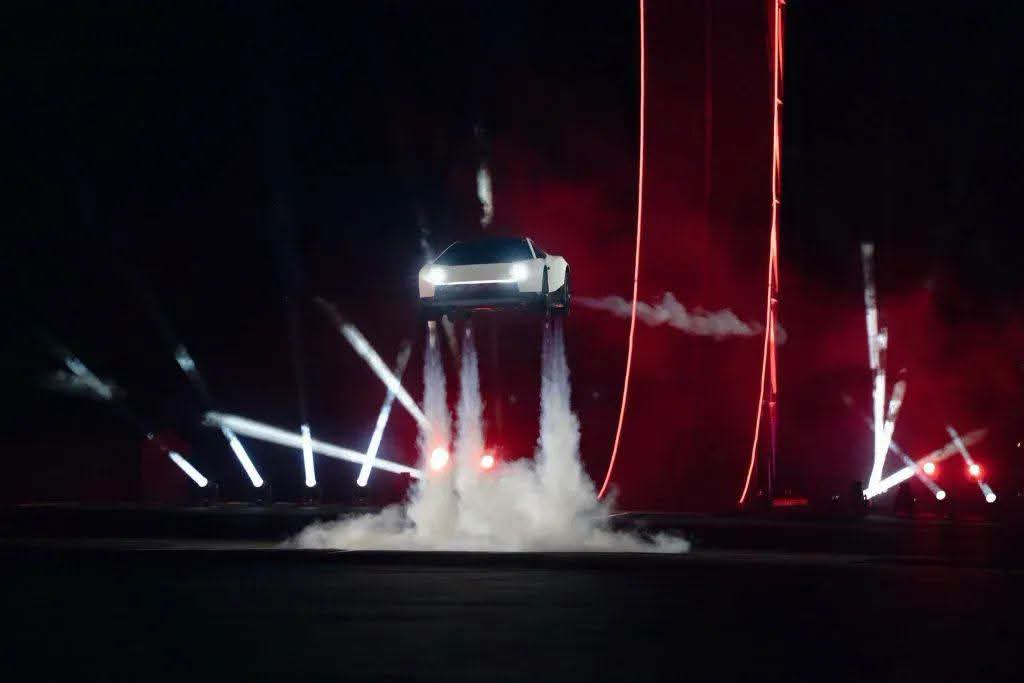
Tesla chief executive Elon Musk has unveiled a new version of the company’s Roadster that he claims can fly, showcasing a futuristic vehicle capable of performing dramatic aerial manoeuvres.
The demonstration took place at a SpaceX test facility in Texas, where the car climbed a steep ramp, flipped in the air and landed using jets, drawing excitement from Tesla supporters.
The two seat sports car was demonstrated without a driver for safety reasons.
Musk said it uses 10 nozzles and what he described as ultra-high-pressure air tanks to propel itself into the air and accelerate on the ground.
During the event, the vehicle also leapt over a row of parked Tesla cars, while Musk claimed it could accelerate from zero to 60 miles per hour in less than a second.
VIDEO: https://youtube.com/shorts/G66v-gcj_60?si=iK4jz368FtC_zK89
Musk described the technology as the result of collaboration between Tesla, the electric vehicle manufacturer, and SpaceX, his rocket company.
He said the Roadster would enter production in 2028, while acknowledging that success was not guaranteed.
However, Tesla has previously missed some of Musk’s projected timelines, and the company has yet to demonstrate that the vehicle can sustain long-distance flight.
The unveiling has raised questions about whether the Roadster is genuinely a flying car or a road vehicle capable of brief airborne movements.
Roger Conner, curator for vertical flight at the Smithsonian’s National Air and Space Museum, warned that combining the weight and safety requirements of a road car with the engineering demands of an aircraft could compromise performance and make such vehicles expensive. He also questioned whether a road-legal car could fly wherever its owner wanted.
Tesla is not alone in pursuing the technology. California-based start-up Alef is developing a flying vehicle that uses eight propellers to lift off the ground. However, its prototype weighs just 254 pounds and carries only one person, highlighting the engineering challenges involved in developing a heavier, road-ready vehicle that can fly safely.
Although Musk’s demonstration showcased the Roadster’s ability to perform aerial stunts, experts say sustained flight remains a much greater challenge. Jim Dukhovny, Alef’s chief executive, said the transition from vertical take-off to forward flight is particularly difficult because the vehicle must maintain lift and stability.
Until Tesla demonstrates those capabilities, the Roadster’s promise of combining high-speed driving with genuine flight remains unproven.
Leave a comment
Your email address will not be published. Required fields are marked *