

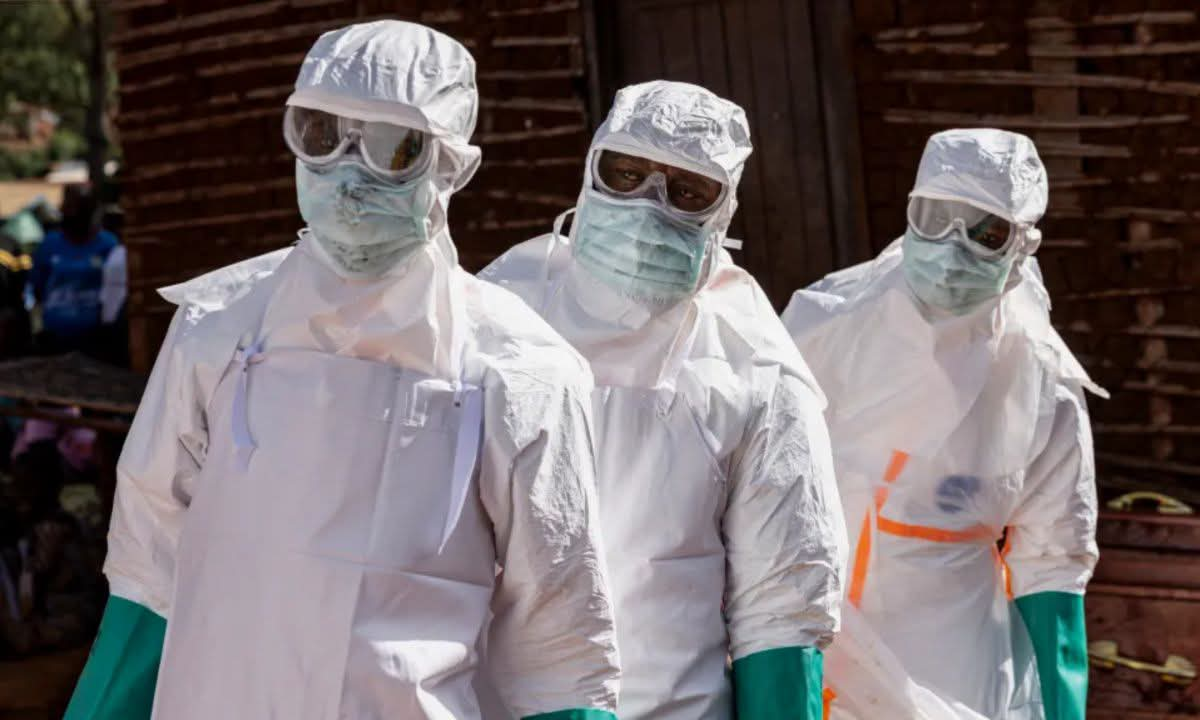
Professor Oladapo Ashiru urges nationwide health alerts, tighter border screening and strict infection control as authorities confirm an imported Ebola case in Abuja and identify 44 contacts.
Nigerians have been urged to avoid kissing, handshakes, hugs and unnecessary physical contact following the confirmation of an Ebola case in Abuja, as health experts call for urgent measures to prevent the disease from spreading.
The President of the Academy of Medicine Specialties of Nigeria, Professor Oladapo Ashiru, gave the warning on Wednesday during an interview on Arise Television, stressing the importance of personal hygiene, physical distancing and strict adherence to infection prevention measures.
Ashiru explained that Ebola is not an airborne disease but spreads primarily through direct contact with the blood and other body fluids of an infected person who is showing symptoms.
“Ebola is not airborne. But avoid kisses, hugs and handshakes,” he said.
He urged Nigerians to remain vigilant and minimise unnecessary physical contact while health authorities intensify efforts to contain the outbreak and prevent further transmission.
The medical expert also called for the immediate activation of high-alert public health protocols across the country, warning that a swift and coordinated response would be critical to containing the infection.
ALSO READ: Nigeria Confirms Ebola Case in Abuja, 44 Contacts Placed Under Surveillance
https://dailyobserver.ng/nigeria-confirms-ebola-case-in-abuja-44-contacts-placed-under-surveillance
He recommended enhanced screening at airports, seaports and land borders, alongside strict infection prevention and control measures in hospitals and other healthcare facilities.
Ashiru further urged health workers to maintain a high index of suspicion for possible Ebola infections and promptly isolate individuals with symptoms consistent with the disease to reduce the risk of transmission.
His warning comes after the Federal Ministry of Health confirmed an imported Ebola case in Abuja on Tuesday, raising concerns about the possibility of further infections.
According to the ministry, the female patient arrived in Nigeria from Uganda, developed symptoms on October 7 and tested positive for the virus on October 20.
Authorities have identified 44 contacts linked to the confirmed case and are expected to continue monitoring them as part of efforts to trace possible transmission and prevent the disease from spreading.
The confirmation has heightened the need for public vigilance, effective contact tracing and strict compliance with established public health guidelines.
While Ebola does not spread through the air like influenza or COVID-19, it can be transmitted through direct contact with the blood or body fluids of an infected person who has symptoms, as well as contaminated materials.
Health authorities typically advise people to avoid direct contact with suspected cases, practise proper hand hygiene and seek immediate medical attention if they develop symptoms after a possible exposure.
As Nigeria strengthens its response, health experts say public awareness, early detection and prompt isolation of suspected cases will be essential to protecting communities and containing the threat.
Leave a comment
Your email address will not be published. Required fields are marked *