

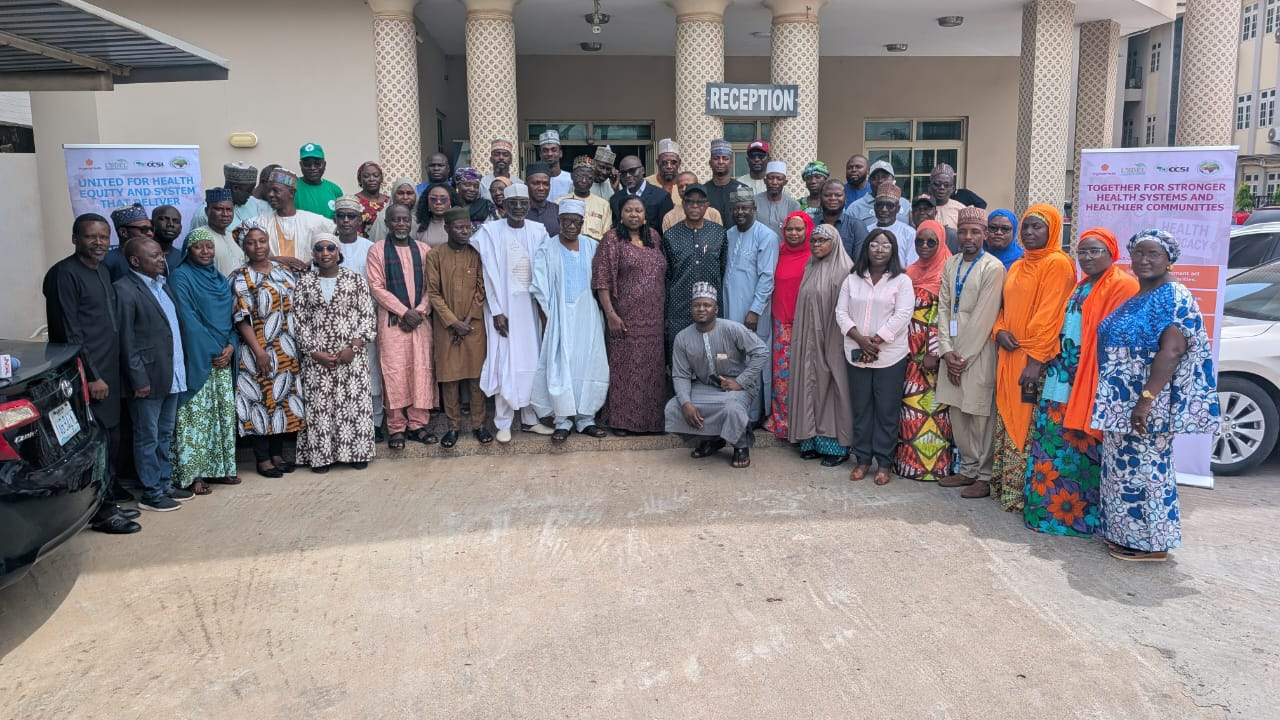
KSPHCB, partners convene 3-day workshop to adapt national WDC framework, boost community participation and improve primary healthcare delivery across the state
The Kaduna State Primary Health Care Board (KSPHCB) Engender Health Consortium Partnership, has convened a 3-day co-creation workshop in Kaduna to adapt and domesticate the National Ward Development Committee (WDC) Guideline for the state.
Representing the Executive Secretary, Director of Community Health Services Mrs. Nafisa Musa Isah told participants that the workshop aims to strengthen community participation in Primary Health Care delivery by reviewing the national guideline and tailoring it to Kaduna’s realities.
Speaking at the opening, Mrs. Isah said WDCs play a critical role in linking communities to health facilities through mobilization for immunization, support for maternal and child health services, and promoting accountability in health planning.
She noted that while WDCs have already contributed to improved health outcomes in Kaduna State, there is a need to clarify their roles, strengthen their capacity, and establish a clear framework to guide their work across all wards.
The Board said it remains committed to implementing the workshop’s outcomes and integrating the domesticated guideline into its PHC programmes and plans.
The National Primary Health Care Development Agency has commended Kaduna State Government for moving to domesticate the National Ward Development Committee (WDC) operational guidelines, describing the 3-day co-creation workshop as timely and aligned with recent national recommendations on strengthening primary health care accountability.
Speaking on behalf of the Agency, Dr. Muhammed Lecky, Chairperson of the Health Sector Reform Coalition Nigeria, said the workshop follows a National Stakeholders’ Engagement Meeting held in Abuja last month to mark one year of the Social and Citizen Accountability for Primary Health Care Performance (SCAPP) Project.
The 2-year project, implemented by HSRC in partnership with BudgIT and KADMAN with funding from the Gates Foundation, focuses on empowering citizens and communities to take ownership of PHC facilities in Kaduna through WDC-led accountability and advocacy.
A key outcome of the Abuja meeting was the recommendation for Kaduna State to domesticate the WDC guidelines within six months to improve PHC performance and accountability at state and national levels.
Dr. Lecky said the current workshop in Kaduna directly implements that recommendation, bringing together federal, state, and community actors to translate evidence into action.
He praised the Kaduna State PHC Board, the Ministry of Health, and partners including EngenderHealth for advancing the initiative, noting that the state’s experience is helping elevate lessons to the national level and foster cross-state learning.
In his goodwill message the Co-chair Maternal Accountability Mechanism in Kaduna Initiative (KADMAM) and Kaduna Health Advocacy and Media Alliance (KADHAMA) Comrade Garba Muhammad appreciate the Kaduna State Primary Health Care Board, Professor Clara Ejembi, ENGENDERHEALTH, development partners, and CSOs for convening the 3-day co-creation meeting to review and adapt the National Guideline on WDCs to the Kaduna State context.
"The initiative is timely and strategic in strengthening community participation, accountability, and PHC service delivery through lessons learnt from past experiences on the linkages of WDCs.
"KADMAM and KADHAMA believe the development of a responsive and context-specific guideline aligned with national standards will enhance community ownership and support the achievement of Universal Health Coverage in Kaduna State.
The welcome address highlights the importance of the 3-day Co-Creation Workshop on the Review and Domestication of the National Ward Development Committee (WDC) Guideline in Kaduna State.
In her welcome address the Commissioner of Health Kaduna state Hajiya Umma K. Ahmed represented by Dr, Sule Danga acknowledges the critical role WDCs play in promoting community participation in primary health care through support for immunization, maternal and child health, malaria interventions, accountability, and stronger links between communities and health facilities.
He emphasizes the need to review and adapt the national guideline to reflect Kaduna State’s realities, strengthen WDC capacities, clarify their responsibilities, and enhance community ownership and service delivery.
He reaffirms the commitment of the Kaduna State Ministry of Health and the State Primary Health Care Board to implementing the workshop’s outcomes and integrating them into health sector plans.
Dr, Sule Danga described the workshop as timely, it aligning with the health sector achievements of the Kaduna State Government under Governor Uba Sani’s Sustain agenda, while appreciating partners and participants for their commitment and formally declaring the workshop open.
The event brought together consultant Professor. Clara Ejembi, traditional leaders, development partners including EngenderHealth and LISDEL, facilitators, and stakeholders to share experiences, set priorities, and produce a practical guideline to improve WDC effectiveness statewide.
Leave a comment
Your email address will not be published. Required fields are marked *