

Rival factions trade accusations, question authority, and expose cracks within a key opposition mobilisation platform ahead of 2027 elections
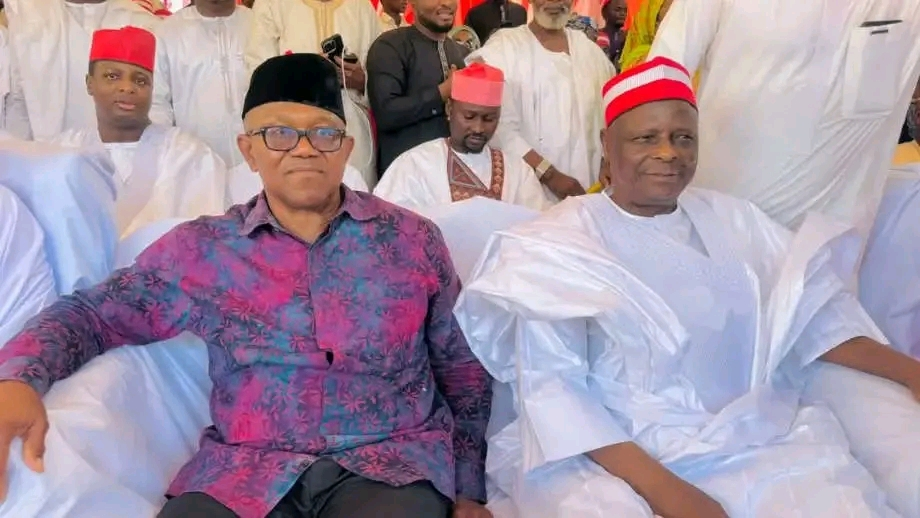
Fresh internal strife has erupted within the OK Movement, a major political support platform backing the joint ambition of Nigeria Democratic Congress (NDC) presidential candidate Peter Obi and former Kano State Governor Rabiu Musa Kwankwaso, raising concerns over unity within the opposition bloc ahead of the 2027 elections.
What began as a routine leadership announcement quickly spiralled into a full-blown power tussle, with competing factions laying claim to the movement’s structure, authority, and direction. The crisis has now laid bare deeper divisions within a coalition expected to play a pivotal role in challenging the ruling All Progressives Congress (APC).
The latest controversy was triggered by the announcement of former Inter-Party Advisory Council Chairman, Peter Ameh, as National Director-General of the OK Movement. The appointment, conveyed in a statement signed by Jackie Wayas—who identified herself as the National Convener—was said to have been unanimously approved by the group’s steering committee.
However, the move was immediately contested. Several members questioned Wayas’ authority to assume the convener role, while others rejected the legitimacy of the appointment altogether. Attempts to clarify her position yielded no response, further fueling suspicion and confusion within the ranks.
The dispute quickly escalated into a broader leadership crisis. Justin Ijeh, the immediate past National Publicity Secretary of the movement, acknowledged internal disagreements but warned against allowing them to spill into the public domain, insisting that such conflicts could undermine the coalition’s electoral prospects.
Behind the scenes, however, the cracks appear deeper. Ijeh revealed that he had stepped aside from his role pending the resolution of the crisis, citing the unusual situation of “multiple individuals claiming to be Director-General” as a major source of dysfunction.
Kwankwaso Welcomes APC Defectors in Kano, Signals NDC’s Growing Political Momentum
In a sharp rebuttal, the movement’s sitting Director-General, John Ughulu, dismissed Ijeh as a dismissed official and accused rival actors of orchestrating a takeover attempt. Ughulu maintained that decisive steps had already been taken to restructure the organisation and remove elements he described as ideologically incompatible.
Tracing the origins of the movement, Ughulu said the OK Movement was conceived as a long-term political vehicle designed to unite supporters of both Obi and Kwankwaso without dissolving their existing bases, particularly the influential Obidient and Kwankwasiyya movements.
According to him, the coalition was never intended to be a temporary election tool but a sustained political structure that could extend beyond 2027 and even into future electoral cycles.
He also disclosed that Obi had privately urged restraint amid the crisis, warning against escalating tensions in the media. Despite this, Ughulu accused some members of attempting to hijack the movement and distort its founding vision.
A key fault line in the crisis appears to stem from overlapping political loyalties. Ughulu defended his decision to separate the OK Movement from the Obidient Movement, arguing that blending both structures would create operational conflicts. He claimed Obi himself had cautioned against merging the two.
Further complicating matters are allegations surrounding funding and internal governance. Ughulu accused some members, including Wayas, of disagreements over funding sources and operational strategy, particularly his insistence on grassroots fundraising rather than accepting undisclosed financial contributions.
Meanwhile, a parallel controversy emerged online, alleging that Obi had removed the National Coordinator of the Obidient Movement Worldwide, Dr Yunusa Tanko, over financial misconduct. Both Tanko and Obi’s media office swiftly dismissed the claims as false and politically motivated.
Tanko denied any wrongdoing, stating that he was neither a signatory to the movement’s accounts nor involved in financial management. He also rejected suggestions of tension between the Obidient Movement and the OK Movement, describing their relationship as collaborative rather than adversarial.
Obi’s media office went further, accusing unnamed political opponents of deliberately spreading misinformation to create divisions within the opposition. The statement urged supporters to ignore what it described as fabricated narratives aimed at weakening the movement’s cohesion.
Adding another perspective, former NNPP spokesman Ladipo Johnson acknowledged the existence of disagreements but downplayed their significance, describing the situation as a “distraction” rather than a structural threat to the coalition’s ambitions.
He confirmed that Obi had been briefed on the situation and expressed dissatisfaction with the unfolding drama, urging stakeholders to prioritise unity over internal rivalries.
The unfolding crisis comes at a critical moment, as opposition forces intensify consultations to build a formidable front capable of unseating the APC in 2027. While leaders continue to project confidence that the disputes are manageable, the public nature of the infighting has raised questions about discipline, coordination, and the durability of the emerging alliance.
For a movement built on the promise of reform and coalition-building, the OK Movement now faces its first major political test: whether it can resolve its internal contradictions or risk weakening the very momentum it was created to harness.
Leave a comment
Your email address will not be published. Required fields are marked *