

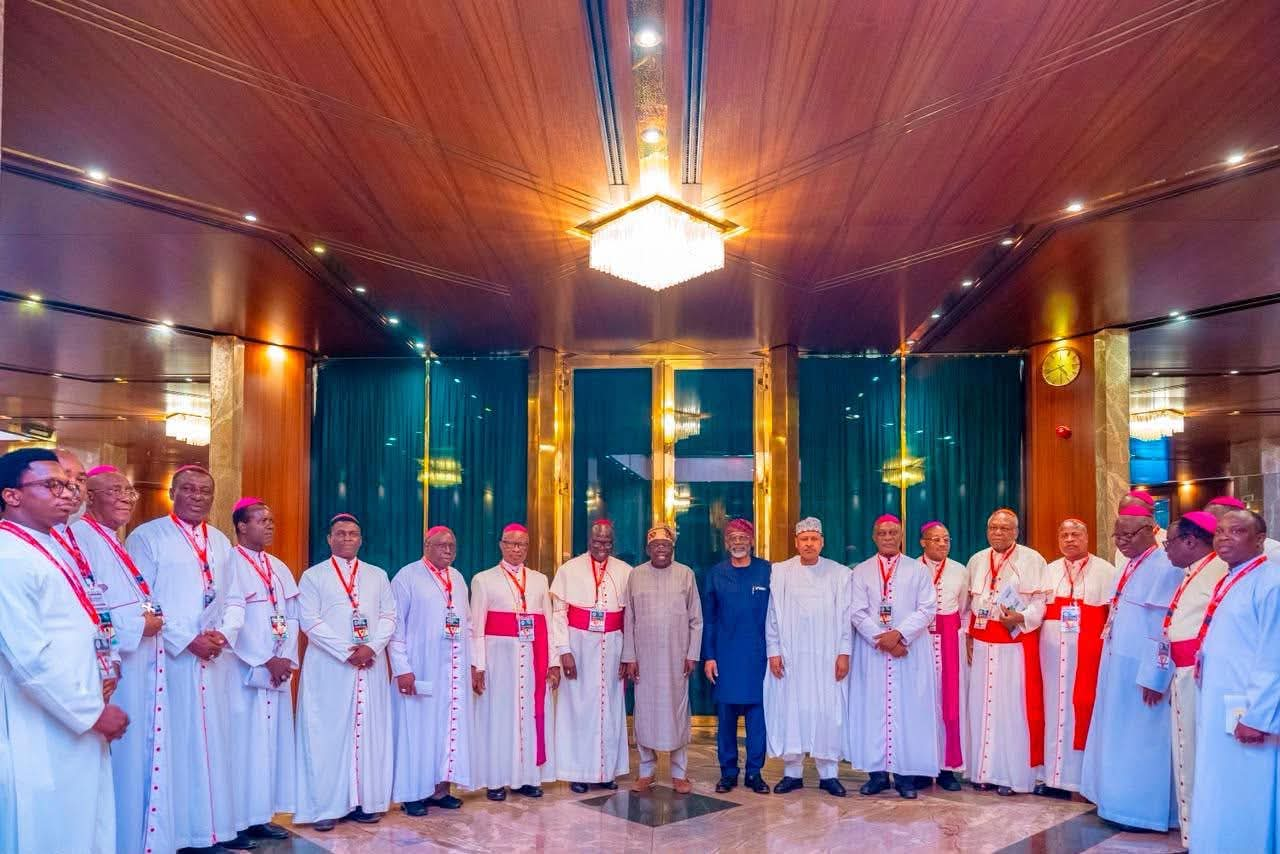
Sunday Dare says clerics’ post-meeting remarks echoed opposition rhetoric, insists reforms are rescuing Nigeria from economic collapse
The Presidency has pushed back against recent comments by leaders of the Catholic Bishops’ Conference of Nigeria (CBCN), accusing some clerics of straying into partisan territory following their engagement with President Bola Ahmed Tinubu at the State House on July 28, 2026.
In a strongly worded statement, the Special Adviser to the President on Media and Public Communications, Sunday Dare, said the expectations of many Nigerians were that the meeting would produce “measured, non-partisan counsel” rooted in moral authority. Instead, he argued, the public commentary that followed reflected “political undertones” that risk diminishing the neutrality traditionally associated with religious leadership.
Dare particularly referenced remarks attributed to Archbishop Emeritus John Cardinal Onaiyekan, which he said came across as “adversarial” rather than conciliatory. According to the Presidency, religious leaders wield significant moral influence and are most effective when they rise above political alignments.
“The strength of clerical authority lies in its perceived independence,” Dare noted, adding that public interventions that appear politically aligned could erode public trust in religious institutions.
The Presidency also took issue with what it described as sweeping criticisms of the Tinubu administration’s performance, insisting that such assessments overlook the difficult conditions inherited in May 2023. Dare painted a picture of an economy on the brink, citing an unsustainable fuel subsidy regime, multiple exchange rates, and a high debt service-to-revenue ratio that strained government finances.
Defending the administration’s policies, Dare highlighted key reforms, including the removal of fuel subsidy and the unification of the foreign exchange system, which he said have helped stabilise public finances and boost allocations to states. He also pointed to initiatives such as the Nigerian Education Loan Fund (NELFUND), agricultural interventions, and infrastructure projects as evidence of ongoing recovery efforts.
According to him, these measures are beginning to yield results, including improved fiscal stability and renewed investor confidence.
The statement further criticised the bishops for, in the Presidency’s view, failing to offer concrete alternatives while raising concerns about governance and the electoral process. Dare argued that questioning the integrity of institutions like the Independent National Electoral Commission (INEC) without evidence could undermine public confidence in Nigeria’s democracy.
He also defended President Tinubu’s democratic credentials, noting his role in Nigeria’s pro-democracy struggle and long-standing participation in electoral politics.
While acknowledging the right of religious leaders to speak on national issues, the Presidency urged them to maintain a unifying tone and provide constructive input that supports national development.
“The country benefits when moral voices contribute to public discourse,” Dare said, “but that influence is strongest when it is balanced, solution-driven, and clearly above partisan contest.”
The exchange reflects ongoing tensions between government officials and civil or religious groups over the direction of reforms and the broader state of the nation, as Nigerians continue to grapple with economic adjustments and political debates ahead of future elections.
Leave a comment
Your email address will not be published. Required fields are marked *