

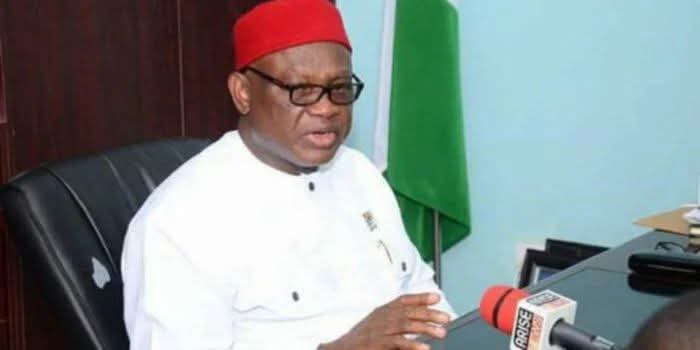
The former APGA national chairman predicts a stronger showing for the NDC presidential candidate in Lagos, dismisses claims that Northerners will reject an Igbo president, and challenges Governor Soludo and FCT Minister Wike over their political positions.
Chief Chekwas Okorie, pioneer National Chairman of the All Progressives Grand Alliance (APGA) and President of Igbo Agenda Dialogue, has predicted that Peter Obi will secure significantly more votes in Lagos State during the 2027 presidential election than he did in 2023.
Okorie expressed confidence that voter mobilisation among Igbo communities and other supporters of the former Anambra State governor would strengthen his electoral performance in Lagos, where Obi previously recorded a strong showing.
Speaking with journalists in Abuja on Wednesday, Okorie addressed three major political issues surrounding Obi's presidential ambition: comments attributed to Anambra State Governor Chukwuma Soludo, claims that Northern voters would reject an Igbo presidential candidate, and statements by Federal Capital Territory Minister Nyesom Wike suggesting that Rivers State and the FCT belong politically to President Bola Tinubu.
The former APGA chairman maintained that the political developments would not distract his group from its efforts to mobilise voters ahead of the 2027 elections.
Okorie Challenges Soludo Over Obi's Presidential Ambition
Okorie criticised what he described as Soludo's stance towards Obi, reminding the Anambra governor that both men emerged from APGA, the political platform that previously brought them to prominence.
He argued that recent electoral developments demonstrated that voters could make independent choices despite the influence of powerful political figures and federal authorities.
Citing the Osun State governorship election, Okorie pointed to the victory of Accord Party candidate Ademola Adeleke as an example of how electoral outcomes could defy political expectations.
He also noted that Adeleke subsequently declared support for Tinubu's re-election bid, suggesting that political leaders could maintain different positions at the state and national levels.
Okorie questioned why Soludo could not adopt a similar approach rather than allowing disagreements with Obi to dominate political discourse.
He further recalled that Soludo was among the first governors to endorse Tinubu for re-election, reportedly doing so before governors elected on the platform of the All Progressives Congress (APC).
According to Okorie, the governor's current position appeared to be driven by personal grievances, although he did not provide evidence to substantiate that claim.
He insisted that Igbo Agenda Dialogue would not spend its time engaging in political exchanges with individuals when, in his view, the broader task of mobilising voters was more important.
Warns Soludo Over Anambra Assembly Elections
Okorie also warned Soludo to pay attention to the political implications of the forthcoming Anambra State House of Assembly elections.
He argued that if Obi's party secured a commanding majority in the legislature, the governor could face a difficult relationship with lawmakers for the remainder of his tenure.
Turning to the presidential contest, Okorie challenged Soludo to demonstrate his ability to deliver substantial support for Tinubu in Anambra State.
He recalled that Tinubu secured approximately 5.3 per cent of votes cast in the South-East during the 2023 presidential election and questioned whether Soludo could raise that figure to 10 per cent in 2027.
The remark underscored the political contest over the South-East electorate, where Obi secured substantial support in the last presidential election.
‘Northerners Can Vote for an Igbo President’
Addressing suggestions that Northern voters would refuse to support an Igbo presidential candidate, Okorie dismissed such claims as campaign-season rhetoric that overlooked Nigeria's political history.
He argued that the country's earlier political experience demonstrated that electoral alliances and voting patterns were not necessarily determined by ethnic identity.
To support his position, Okorie recalled the First Republic, when the National Council of Nigeria and the Cameroons (NCNC), associated with Dr Nnamdi Azikiwe, competed alongside the Northern People's Congress (NPC) and the Action Group.
He maintained that an alliance between Azikiwe and Action Group leader Chief Obafemi Awolowo could have produced a government, potentially with Azikiwe emerging as prime minister because of the NCNC's position as the senior partner.
However, Okorie said Azikiwe ultimately prioritised national stability in the political calculations of that period.
He argued that the experience showed why Nigerians should avoid assuming that ethnic differences would automatically determine voting decisions.
Okorie also cited a historical example involving a Fulani politician who reportedly won electoral support in Enugu despite the relatively small Fulani population in the area at the time.
According to him, Igbo voters elected the politician for a second term as an independent candidate after his party declined to nominate him again.
He described the episode as evidence that voters could support candidates outside their ethnic groups when political circumstances and individual preferences aligned.
Okorie blamed what he described as inadequate knowledge of Nigeria's political history for some of the negative comments directed at Igbo presidential aspirations.
He maintained that political leaders and younger Nigerians needed to understand the country's history of cross-ethnic cooperation rather than assume that an Igbo candidate could not attract support from other regions.
Okorie Fires Back at Wike Over Rivers, FCT
Okorie also criticised Wike's political posture, placing the FCT minister among those he believed should not distract Obi's supporters from their electoral preparations.
He challenged suggestions that Rivers State and the FCT were politically secured for Tinubu, arguing that the 2023 presidential election showed a more complicated picture.
According to Okorie, Obi won approximately 58 per cent of votes cast in the FCT in 2023, while Tinubu and former Vice-President Atiku Abubakar shared the remaining votes.
He further claimed that neither of the two candidates reached the 25 per cent threshold in the territory, an issue he said had also featured in court proceedings.
The figures, he argued, demonstrated that political loyalties in the FCT could not simply be taken for granted ahead of another presidential contest.
On Rivers State, Okorie questioned Wike's apparent suggestion that he played a decisive role in securing Tinubu's victory in the state.
He argued that Obi had not possessed a political structure in Rivers comparable to those of the established major parties during the 2023 election.
Okorie said Wike's comments raised questions about the respective roles of political leaders, party structures and voters in determining election outcomes.
His remarks reflected the growing political debate over whether influential officeholders could guarantee electoral support for a presidential candidate in 2027.
‘Igbo Voters Must Not Stay at Home’
Despite the political disagreements, Okorie's central message to Igbo voters was a call for greater participation in the next presidential election.
He urged eligible voters not to stay away from polling stations, stressing that voter turnout and direct engagement with communities would be critical to Obi's electoral prospects.
Okorie expressed particular confidence in Lagos State, where large Igbo communities form part of the wider electorate.
He predicted that the number of Igbo voters who would turn out to vote in Lagos in 2027 would be twice the number who participated in the 2023 election.
He added that his group had put arrangements in place to reach out to these communities and engage them directly.
The comments signal an effort by Obi's supporters to build on his 2023 performance through expanded grassroots mobilisation, particularly in states where voter participation and electoral alliances could prove decisive.
With the 2027 presidential election approaching, Okorie's remarks highlight the political calculations already taking shape around Obi's candidacy, the influence of regional leaders and the prospect of cross-ethnic voting.
Whether the projected increase in Lagos votes and broader support across the country will materialise remains to be seen. For Okorie, however, the priority is clear: mobilise voters, challenge assumptions about ethnic voting patterns and ensure supporters turn out when Nigerians head to the polls.
Leave a comment
Your email address will not be published. Required fields are marked *