

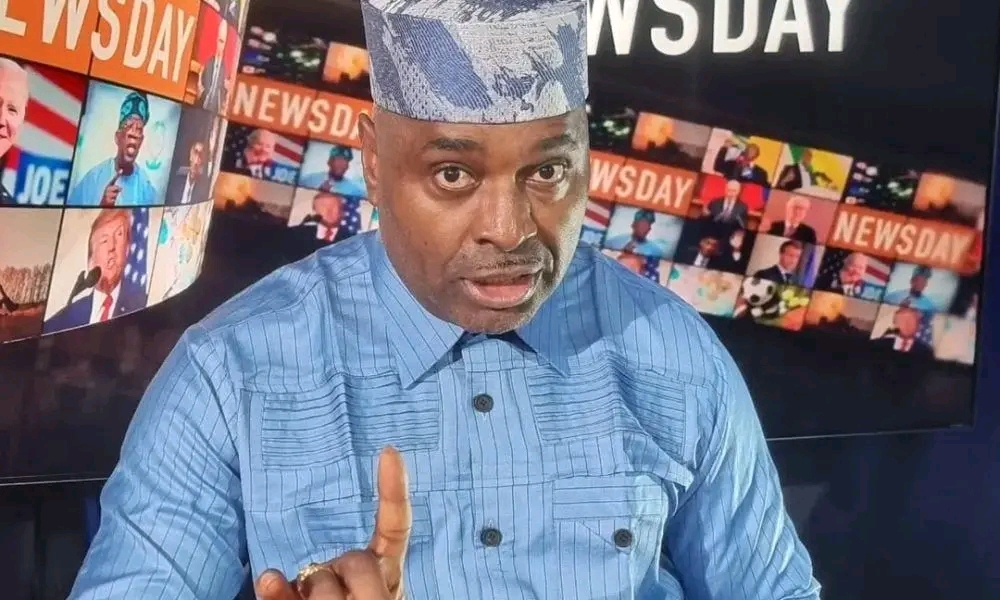
The ADC leader criticised the Tinubu administration over rising debt, electricity tariffs and what he described as inadequate infrastructure despite the removal of fuel subsidy.
A chieftain of the African Democratic Congress (ADC), Kenneth Okonkwo, has accused President Bola Tinubu’s administration of piling up debt without delivering the infrastructure and public services Nigerians were promised following the removal of the petrol subsidy.
Okonkwo made the allegation on Tuesday during an interview, where he launched a scathing criticism of the Federal Government’s economic policies and questioned how the government is using the revenue generated since the subsidy was removed.
He described the administration’s performance as a “total failure”, arguing that Nigerians have yet to see significant improvements in electricity supply, roads and other critical infrastructure despite the government’s increased revenue.
“Everything about this regime is a failure. Tell me, just tell me. The President is borrowing this country into slavery,” Okonkwo said.
According to him, the Tinubu administration justified the removal of the fuel subsidy by promising that the resulting savings would be redirected into infrastructure and programmes aimed at improving the welfare of Nigerians.
Okonkwo compared the policy with measures introduced by previous administrations after subsidy-related reforms.
He cited the Petroleum Trust Fund (PTF), established during the administration of former military Head of State Sani Abacha, and the Subsidy Reinvestment and Empowerment Programme (SURE-P), introduced under former President Goodluck Jonathan.
“All the presidents before him, when they removed the subsidy, instituted programmes to reinvest the subsidy savings to help the masses. Sani Abacha established the Petroleum Trust Fund (PTF); Goodluck Jonathan introduced SURE-P,” he said.
The ADC chieftain questioned why, despite the removal of the subsidy and what he described as increased government revenue, Nigerians were still facing inadequate public infrastructure and rising electricity costs.
“This president, who is boasting that by August or September he has gotten all the revenue he needed, has now removed the subsidy completely. He’s not giving us public infrastructure, no power, no good roads, no electricity, no energy,” he said.
Okonkwo also raised concerns over Nigeria’s debt profile, putting the country’s debt under the Tinubu administration at N166.6 trillion.
He argued that the growing debt burden, combined with the removal of fuel subsidy and higher electricity tariffs, was placing additional pressure on ordinary Nigerians.
“N166.6 trillion in debt under Tinubu’s regime. The country is not paying subsidy, electricity tariffs are rising, and the country does not have public infrastructure,” he said.
He further questioned government spending, alleging that public funds were being wasted on what he described as unnecessary government agencies and luxury items.
“What is he doing with the money? They are squandering it on fake agencies. They are squandering it on private jets, private yachts. What is going on in this country?” Okonkwo asked.
His comments add to growing political criticism of the Federal Government’s economic policies, particularly over the impact of subsidy removal, inflation, electricity costs and Nigeria’s rising public debt.
The Tinubu administration has maintained that its economic reforms are aimed at stabilising the economy, increasing government revenue and creating the conditions for long-term growth, while the government has continued to announce infrastructure and social investment initiatives.
Okonkwo’s remarks, however, reflect the position of an opposition figure who argues that Nigerians have yet to see sufficient improvements in living conditions to match the government’s increased revenues and ongoing economic reforms.
Leave a comment
Your email address will not be published. Required fields are marked *