

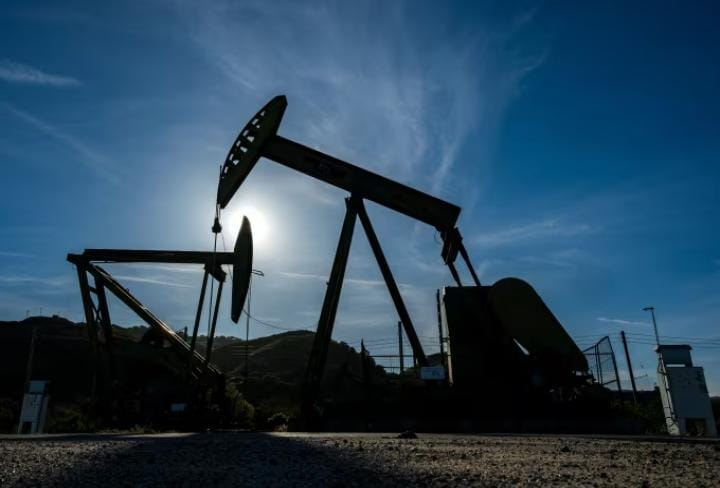
Brent crude briefly reaches $100 a barrel as attacks and disruptions around key Middle Eastern shipping routes raise concerns over global energy supplies
Global oil prices have surged to $100 per barrel, reaching their highest level since July as escalating conflict in the Middle East fuels fresh concerns about disruptions to crude supplies and global energy markets.
Brent crude, the global benchmark, rose 2.3% early Wednesday to briefly hit $100 per barrel before easing slightly, while US crude gained 1.3% to trade at around $94 per barrel.
Both benchmarks have gained more than 60% this year as traders closely monitor the impact of the widening conflict on oil production, exports and shipping routes.
The latest price surge followed a series of military developments, including reported US strikes on Iranian oil tankers and attacks by Iran-backed Houthi fighters on Saudi Arabia.
The US Central Command said four Iranian tankers were struck in the Gulf of Oman and another near Kharg Island, a major hub for Iran's oil exports, following attempted ballistic missile attacks on a US Navy warship.
Market concerns have also intensified over the Strait of Hormuz, one of the world's most important energy shipping routes.
Disruptions in the strait have affected oil tanker traffic and hampered liquefied natural gas shipments, while attacks around the Red Sea and Bab al-Mandab Strait have further complicated the movement of crude and other energy products.
The latest developments have raised fears that prolonged disruption to shipping routes could tighten global supplies and push energy prices significantly higher.
The impact is already being felt by consumers, with gasoline, diesel, jet fuel and natural gas prices rising in several markets.
In the United States, the national average diesel price reached a record $5.90 per gallon, according to AAA data, increasing concerns that sustained energy costs could worsen inflation and squeeze household disposable incomes.
Oil prices have remained highly volatile throughout the year. Brent crude fell to around $72 per barrel in June after an agreement was announced to reopen the Strait of Hormuz, but prices have since climbed again as fighting and uncertainty persisted.
Analysts say traders will continue to closely monitor tanker movements, military developments and the security of major shipping routes across the Middle East.
Any further disruption to oil production or transportation could trigger another sharp increase in global energy prices, adding to inflationary pressures and raising concerns for businesses and consumers worldwide.
Leave a comment
Your email address will not be published. Required fields are marked *