

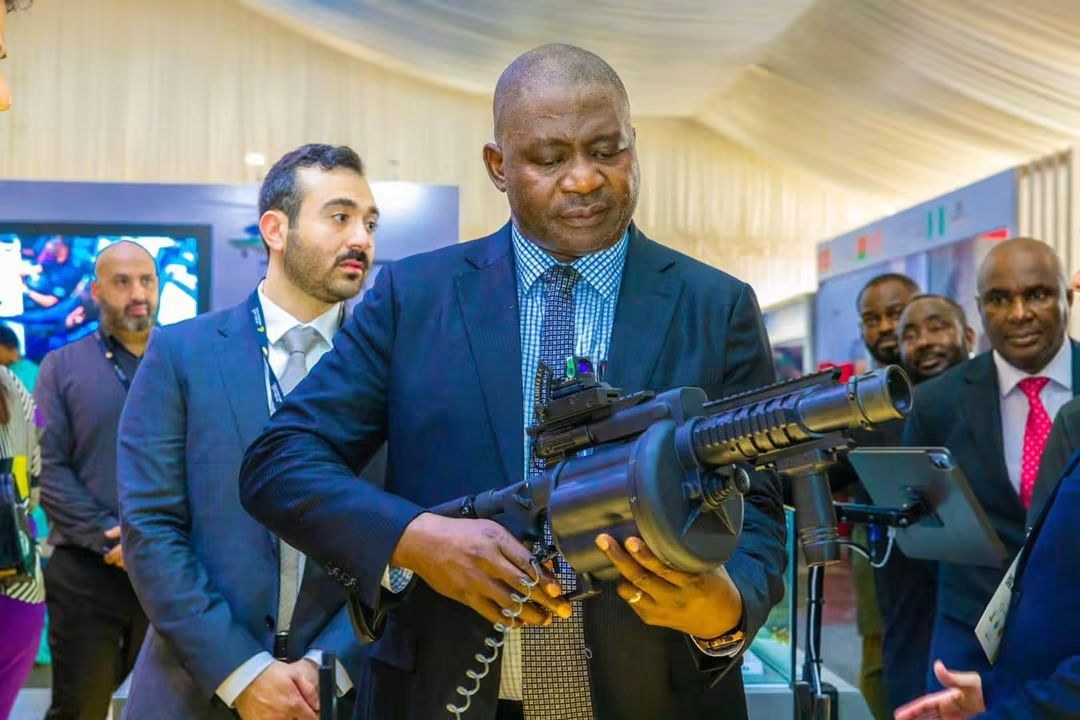
Defence Minister Christopher Musa says Nigeria is stepping up efforts to reduce reliance on imported military hardware, strengthen indigenous defence manufacturing and position the country to supply equipment to other African nations.
Nigeria is expected to begin large-scale local production of military hardware within the next year as the Federal Government intensifies efforts to strengthen the country’s defence industry and reduce dependence on foreign suppliers.
The Minister of Defence, General Christopher Musa, announced the plan after attending the maiden Africa International Defence Exhibition (AFRIDEX) 2026, an event that brought together African governments, military institutions, defence manufacturers and technology innovators to explore opportunities for security cooperation and industrial development.
Musa said the government was committed to building Nigeria’s capacity to manufacture essential military equipment locally, with the aim of meeting the operational needs of the Armed Forces and eventually supplying defence products to other African countries.
The initiative is expected to place greater emphasis on the Defence Industries Corporation of Nigeria (DICON), the country’s state-owned defence manufacturing institution, as the government seeks to expand indigenous production capabilities.
According to the minister, the strategy will involve increased investment, research and development, technology transfer, and partnerships with international defence manufacturers to accelerate local production.
The planned expansion is expected to cover military equipment, weapons, ammunition and other essential defence systems required by the Nigerian Armed Forces.
Government targets reduced dependence on foreign suppliers
Nigeria’s proposed shift towards large-scale domestic defence production comes amid growing efforts to strengthen national security and improve the military’s ability to respond to emerging threats.
Greater local manufacturing capacity could help reduce the country’s dependence on imported military hardware, improve access to essential supplies and create opportunities for Nigerian engineers, scientists and defence technology specialists.
It could also help develop local expertise in the design, production and maintenance of military equipment, while supporting the growth of industries linked to defence manufacturing.
However, the success of the initiative will depend on sustained funding, access to advanced technology, skilled personnel, quality control and the ability of local manufacturers to produce equipment that meets the operational requirements of the Armed Forces.
AFRIDEX to drive defence partnerships
Musa also highlighted the importance of AFRIDEX 2026 in creating opportunities for Nigeria to deepen international partnerships and exchange technical expertise with other countries.
The exhibition provided a platform for governments, military institutions and defence industry stakeholders to explore collaboration in military technology, equipment manufacturing and security solutions.
The minister said such engagements would help Nigeria develop a stronger and more competitive defence industry capable of meeting domestic requirements while opening up opportunities to serve other African markets.
Beyond strengthening military capabilities, the expansion of indigenous defence manufacturing could support technology development, create skilled jobs and encourage investment in related industries.
If successfully implemented, the plan would mark a significant step towards Nigeria’s ambition to become a major defence manufacturing hub in Africa.
For now, attention will be on how quickly the government can translate its one-year target into operational production capacity and deliver equipment that meets the country’s growing defence needs.
Leave a comment
Your email address will not be published. Required fields are marked *