

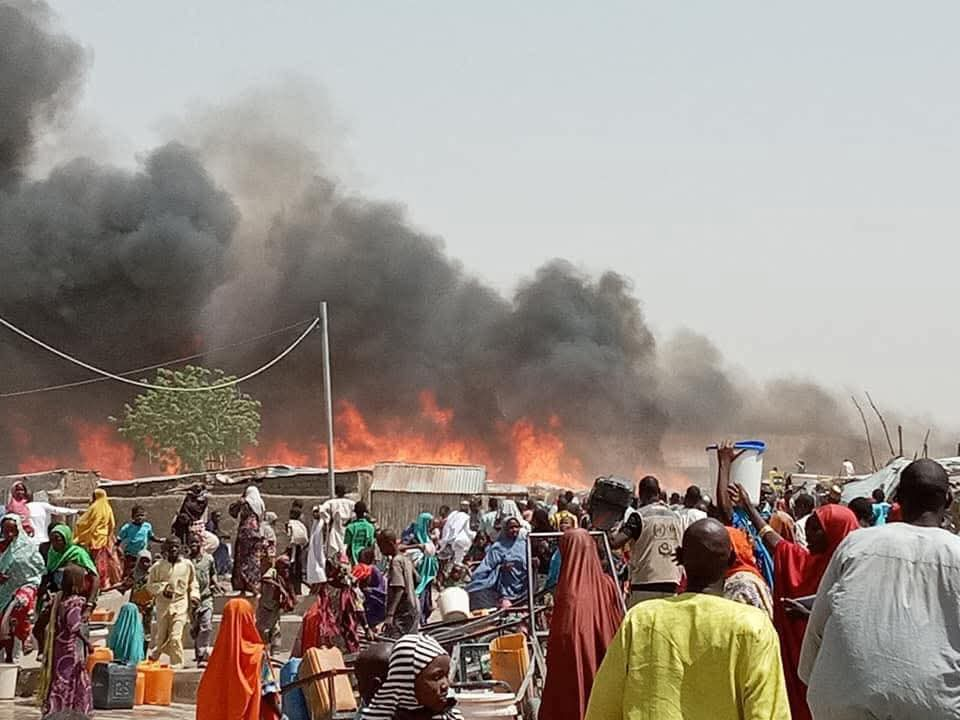
Political analyst Tobi Michael questions whether the UN and African Union are doing enough to protect Nigerian civilians as killings, abductions, displacement and other forms of violence persist across the country.
As killings, abductions, forced displacement and attacks on communities continue to raise concerns across Nigeria, questions are increasingly being asked about the role of the international community in responding to the country’s prolonged security crisis.
Political and social analyst, Tobi Michael, has challenged the United Nations (UN), African Union (AU) and other international institutions to move beyond documenting incidents of violence and take more meaningful steps towards protecting civilians.
Michael, while acknowledging the importance of international monitoring and documentation, questioned whether repeated reports, statements of concern and condemnations were enough to address the scale of suffering experienced by Nigerians living in conflict-affected communities.
“If international institutions can repeatedly document mass killings, abductions, forced displacement, sexual violence and the destruction of communities, while civilians continue to suffer, then we have to ask a difficult question: Is the international system actually protecting people—or merely documenting their deaths?” he asked.
Nigeria has battled multiple security challenges for more than a decade, including terrorism and insurgency in the North-East, banditry and mass kidnappings in the North-West and parts of the North-Central, communal violence and other forms of organised criminal activity.
The violence has resulted in deaths, injuries, displacement and the destruction of homes, farms and livelihoods, while thousands of families have been forced to live away from their communities.
Michael argued that the recurring nature of the attacks meant the international community should not continue to view each incident as an isolated tragedy.
According to him, the repeated attacks on civilian populations, abductions, displacement and reports of sexual violence raise broader questions about the effectiveness of existing international mechanisms for preventing mass atrocities and protecting vulnerable populations.
He, however, cautioned against casually applying international legal labels to every incident of mass violence.
“Calling something a crime against humanity is a specific legal determination. Not every killing or mass attack automatically meets that threshold,” he said.
He maintained that the more fundamental question was whether enough was being done to prevent the continued loss of civilian lives.
“How many civilians must die before the international response becomes more than documentation?” Michael asked.
Calls for stronger international engagement
Michael said the UN and AU already possess a range of diplomatic, humanitarian, investigative, peacebuilding and accountability mechanisms that could potentially be deployed more effectively to support efforts to protect Nigerian civilians.
He stressed that stronger international engagement did not necessarily mean the deployment of foreign troops into Nigeria.
Rather, he argued that international institutions could strengthen diplomatic pressure, humanitarian assistance, independent investigations, early-warning mechanisms, peacebuilding initiatives and accountability processes while working with Nigerian institutions.
“The UN and AU don't necessarily have to send foreign troops into Nigeria. They have diplomatic, humanitarian, investigative, peacebuilding and accountability mechanisms that can be strengthened and used more aggressively,” he said.
The analyst also acknowledged Nigeria’s sovereignty, noting that the responsibility for maintaining security and protecting citizens ultimately rests with the Nigerian state.
“Nigeria is a sovereign country, and sovereignty matters. But so does human life,” he said.
His comments highlight the delicate balance between respecting Nigeria’s sovereignty and the international community’s broader responsibility to respond when civilians are exposed to persistent violence and humanitarian crises.
Beyond statements and condemnations
For residents of communities affected by insecurity, international attention can sometimes appear distant from the realities they face, with global responses often taking the form of reports, statements and expressions of concern after attacks have already occurred.
Michael questioned whether such responses were sufficient when communities continued to face repeated attacks.
He argued that the effectiveness of international institutions should not be measured only by their ability to record or condemn violence, but also by their capacity to contribute to preventing its recurrence.
“If international institutions have the capacity to record suffering but not meaningfully help prevent its repetition, then Nigerians have every right to ask: What exactly is the purpose of an international system designed to protect civilians?” he said.
His remarks have also opened a wider debate about the respective responsibilities of the Nigerian government, regional organisations such as the AU and international bodies including the UN in confronting the country's security challenges.
While some may argue that Nigeria should resolve its security problems primarily through its own institutions, others believe the scale and persistence of the humanitarian consequences warrant stronger international support.
The debate is particularly significant as communities continue to grapple with the consequences of violence, including displacement, loss of livelihoods, disrupted education and deepening humanitarian needs.
Michael ultimately urged Nigerians and the international community to confront the question of whether existing responses are adequate.
“Should the UN and AU be doing significantly more in Nigeria, or should Nigeria handle its security crisis entirely through its own institutions?” he asked.
Leave a comment
Your email address will not be published. Required fields are marked *