

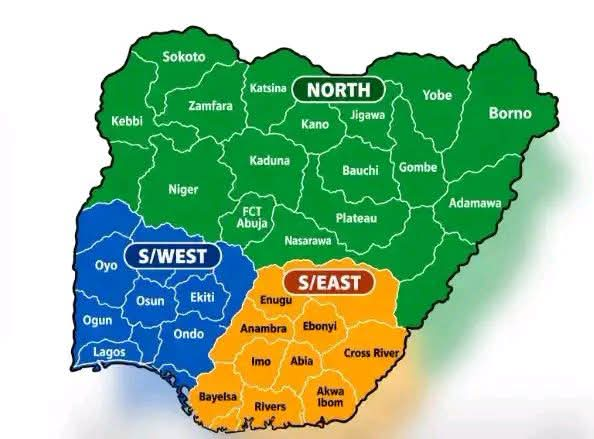
Igbo Leaders of Thought reject Abuja restructuring conference resolutions, push for resource control, regional police and a broader Igbo region, drawing fierce opposition from South-West leaders and the Arewa Consultative Forum.
Nigeria’s long-running debate over restructuring has taken a fresh turn following a controversial proposal by Igbo Leaders of Thought to suspend the 2027 general elections until sweeping changes to the country’s federal structure are completed.
The group rejected the outcome of the August 2026 Abuja restructuring conference, accusing its organisers of disregarding their position on how Nigeria should be governed.
It proposed reorganising the country into 10 regions, granting them control over their natural resources and policing arrangements, while advocating an expanded Igbo region extending beyond the five South-East states.
The group also called for a temporary suspension of the 2027 elections until the proposed restructuring is completed by May 2027.
However, the demands have triggered strong reactions from political and socio-cultural groups, particularly in the South-West and northern Nigeria, exposing deep divisions over the future of the federation as the next general elections approach.
South-West leaders reject proposal
Mogaji Gboyega Adejumo, who led the South-West delegation to the Abuja conference, described the Igbo position as unrealistic, arguing that Nigeria’s structural problems require broad-based engagement rather than unilateral demands by any ethnic group.
He said many ethnic nationalities were still grappling with the complexities of restructuring and urged Igbo leaders to reconsider their approach.
“The Leaders of Thought should better go back and think very well about how the Igbo people can be liberated,” Adejumo said.
He emphasised the need for dialogue and consensus, warning against strategies that could deepen divisions instead of building agreement on the country’s political future.
Afenifere, the pan-Yoruba socio-political organisation, also rejected the proposed regional arrangement, warning that creating regions as the primary federating units could destabilise the country, particularly in areas with significant minority populations.
The group reaffirmed its support for the resolutions of the 2014 National Conference, which retained states as the federating units while allowing states to merge voluntarily.
Its position reflects concerns that a regional structure imposed without sufficient consultation could create fresh disputes over boundaries, political representation and the interests of minority communities.
Arewa forum faults call to suspend elections
The Arewa Consultative Forum (ACF) also opposed the proposal to halt the 2027 elections, describing the demand as unconstitutional.
The forum’s spokesman, Prof. Tukur Baba, argued that no ethnic organisation has the authority to suspend Nigeria’s democratic process or unilaterally determine the terms of restructuring for the entire country.
“The call for the postponement of the election is not in the constitution,” Baba said.
His remarks underline the resistance to linking the electoral timetable to the completion of a restructuring programme that remains politically contentious.
The controversy has also raised questions about how far political negotiations can go without undermining constitutional procedures and the regular transfer of power through elections.
OPC describes proposal as selfish
The Oodua People’s Congress (OPC) described the Igbo group’s proposal as “selfish and retrogressive,” adding to the growing opposition from Yoruba organisations and political voices.
Other South-West stakeholders maintained that restructuring should be guided by the freely expressed wishes of the communities concerned rather than ethnic claims advanced without wider consultation.
For these groups, the central issue is not simply whether Nigeria should be restructured, but how any new arrangement would protect minorities, distribute political power fairly and prevent one community’s interests from overriding those of others.
Some Yoruba leaders back deeper federalism
Despite the opposition, some South-West figures have expressed support for significant changes to Nigeria’s federal system.
Aare Sooko Oladotun Hassan is among those backing deeper federalism and regional policing, arguing for a governance structure that gives subnational authorities greater responsibility.
However, proponents of this position have stressed that restructuring should proceed alongside the democratic process rather than become a condition for suspending elections.
The distinction highlights a potential area of agreement among some stakeholders: Nigeria’s governance structure may require fundamental changes, but the timing, framework and political process for achieving them remain disputed.
Nigeria’s restructuring debate intensifies
The latest confrontation has revived longstanding disagreements over resource control, regional autonomy, policing, constitutional reform and the distribution of power among Nigeria’s diverse ethnic nationalities.
Supporters of restructuring have consistently argued that the current federal arrangement concentrates too much authority at the centre, limiting the ability of states and communities to manage their affairs and develop their resources.
Opponents of particular restructuring proposals, however, warn that poorly negotiated changes could intensify ethnic tensions, marginalise smaller communities and create new political uncertainties.
The Igbo Leaders of Thought’s demand for a 10-region federation has therefore added another contentious proposal to an already crowded national debate.
With the 2027 general elections approaching, the challenge for political leaders and other stakeholders is to determine whether a broad consensus can emerge on constitutional reform without jeopardising the electoral timetable.
For now, the sharply contrasting positions of Igbo, Yoruba and northern groups suggest that Nigeria’s restructuring debate remains far from settled, with the country’s future federal arrangement likely to remain a major political issue in the run-up to the next elections.
Leave a comment
Your email address will not be published. Required fields are marked *