

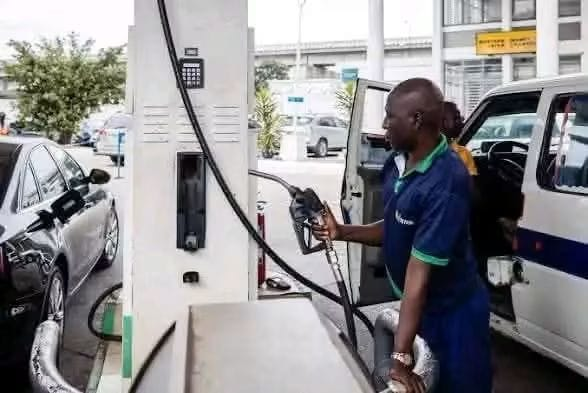
Finance Minister Taiwo Oyedele says the temporary price relief will prioritise public transport operators, while the government negotiates a ₦1,350-per-litre ceiling on petrol costs to cushion Nigerians against market volatility.
The Federal Government has announced a 30-day discount on petrol sold by the Nigerian National Petroleum Company Limited (NNPC Ltd.), in a move aimed at easing the burden of rising fuel costs on Nigerians, particularly public transport operators.
The Minister of Finance and Coordinating Minister of the Economy, Taiwo Oyedele, announced the measure during a press briefing in Abuja on Thursday, describing it as a temporary intervention that would allow NNPC to sell petrol at cost price rather than add its usual retail profit margin.
Oyedele said the initiative would run for an initial period of 30 days, with public transporters across the country given priority.
“We are offering discount on petrol dispensed by NNPC Limited for the next 30 days in the first instance, with priority for public transporters nationwide,” the minister said.
He stressed that the arrangement should not be interpreted as a return to fuel subsidy, insisting that the government was simply directing the national oil company to sell petrol without adding its retail profit margin.
In practical terms, if the cost of supplying petrol stands at ₦1,300 per litre, NNPC would sell it at that price instead of adding a profit margin.
The announcement comes amid elevated petrol prices across the country, with NNPC pump prices reportedly standing at about ₦1,355 per litre in Lagos and Rivers states, ₦1,370 in Abuja, and ₦1,430 or more in some other locations.
FG Plans ₦1,350 Petrol Cost Ceiling
Beyond the 30-day discount, the Federal Government is negotiating measures designed to reduce the impact of fluctuations in crude oil prices and foreign exchange rates on domestic petrol prices.
Oyedele disclosed that the government was working towards a ₦1,350-per-litre ceiling on ex-gantry or landing costs, a move intended to prevent petrol prices from responding immediately to every change in international crude oil prices and exchange rates.
Under the proposed arrangement, refiners and importers would absorb costs whenever prices exceed the agreed ceiling, with the possibility of recovering the difference when market conditions become more favourable.
The government is also pursuing forward crude oil sales to domestic refineries at $80 per barrel for six months.
The arrangement is expected to provide greater certainty for local refiners and help shield petrol prices from sudden market shocks.
Other measures under consideration include the removal of illegal levies contributing to transportation costs, accelerating the rollout of compressed natural gas (CNG), and providing support for vulnerable Nigerians affected by rising living costs.
Tinubu Backs Temporary Relief
The Presidency has thrown its weight behind the initiative, with presidential spokesman Bayo Onanuga saying the measure has the backing of President Bola Tinubu.
According to the Presidency, the intervention is intended to ease the financial pressure on Nigerians without reversing the removal of petrol subsidy announced by the Tinubu administration on May 29, 2023.
The government is also hoping that other fuel marketers will adopt similar pricing arrangements to extend the benefits beyond NNPC filling stations.
Will Nigerians Feel the Impact?
Despite the announcement, questions remain over how much relief the temporary discount will deliver to ordinary Nigerians.
With the measure giving priority to public transport operators, commuters will be watching to see whether lower fuel costs translate into reduced fares or whether transport prices remain unchanged.
There are also questions about how the discount will be implemented nationwide, how many motorists and transport operators will benefit, and whether the arrangement will lead to longer queues at NNPC filling stations.
The proposed ₦1,350-per-litre cost ceiling also remains subject to negotiations, while the extent to which refiners and importers can absorb higher costs without passing them on to consumers remains to be seen.
For now, the Federal Government insists that the initiative is not a return to fuel subsidy but a temporary effort to sell petrol at cost and cushion the effects of high prices.
Whether the 30-day intervention delivers meaningful relief at the pump—and ultimately lowers transport fares—will be the real test of the policy.
Leave a comment
Your email address will not be published. Required fields are marked *